



Like many cities across the country with old, outdated zoning codes, over the past two years my city has been going through the painful and highly necessary process of rewriting our entire rulebook. Similar many other cities, that process began with a grand vision of creating walkable, vibrant, mixed-use neighborhoods full of diverse housing types—ranging from single-family homes to duplexes and small apartment buildings. Of course, the process has also been accompanied by very loud objections from the wealthiest neighborhoods. This has led to compromise after compromise until today, where the current draft is still much better than the old 1970s code, but remains a far cry from the vision initially laid out.
Every time I sit through these meetings and walk past the “Rethink Rezoning” signs, a deep frustration boils up inside me. Why do we even have to go through this? That thought inevitably leads to: Would we be better off without zoning at all?
The conclusion I’ve begun to approach, especially as we near the 100th anniversary of Euclid v. Ambler this fall, is that maybe we would be.
And yet, in one of these meetings, I saw a shiny urbanist object I could not ignore. In the new code, they are proposing a requirement that all car-oriented uses—like surface parking lots, drive-thrus, and gas stations—receive a special use permit. Combine that with new form-based elements, and maybe, just maybe, we have the potential to finally enact a code that doesn’t just encourage, but requires good urbanism. Maybe zoning codes can be in service of urbanism, not a hindrance to it.
I think this is a lie we urbanists tell ourselves to avoid rocking the boat. We cannot achieve the outcomes we seek by tinkering at the edges and creating a “better” zoning code. Zoning, even at its best, is simply a tool to prevent bad outcomes. It is not a tool to create good outcomes, and it is overdue that we stopped pretending it is.
Overturning Euclid would give us the chance to rethink our tactics wholesale, shifting our focus to ask what we can do to create good places rather than asking what we can do to prevent bad ones.

What do we want in our communities?
I think it’s fair to say that the Overton window has begun to shift in favor of urbanists. Thanks to the hard work of the first few generations of New Urbanists, vibrant, mixed-use communities are seen as a laudable goal by urbanists and non-urbanists alike. New generations of planners go off to school eager to build these places, only to find themselves constrained by a system designed to prohibit them. One look at the American Planning Association website shows this trend — they talk about walkability, housing choice, “livable cities,” all of the things we say we want. It’s tempting to think that this promising new generation will continue to transform the profession for good, using the tools of zoning to prevent further sprawl and usher in this new era.
But without Euclid, wouldn’t we lose the benefits of this nascent shift?
In a hypothetical scenario where Euclid v. Ambler was taken back to the Supreme Court and overturned, it’s likely we would lose a lot of the innovative tools that are beginning to work to create better cities. Most notably, we would probably lose the legal basis for form-based codes, which have become a far better alternative for guiding city growth. Elements of form-based codes are being implemented across the country, but the theory of form-based codes doesn’t always line up with the practice. Many of them just become bastardized Euclidean codes with form-based inspiration.
My fellow columnists have laid out the arguments for why Euclid should be overturned morally and constitutionally. In isolation of those arguments, I would posit that pure form-based codes adopted widely across the country would be better than overturning Euclid. But unfortunately, that just isn’t a realistic scenario.
To put this into perspective, my city began reviewing its comprehensive plan in 2017. When that process finished in 2021, it called for rewriting the zoning code. That rewrite didn’t begin until 2024, and is now slated to finish in late 2026 or early 2027. In summation, it took ten years for a city with good planners and the noble goal of a walkable urban environment to push through a watered-down version that makes a handful serious steps forward, but still fails to meaningfully move the needle on basic things like allowing duplexes everywhere.
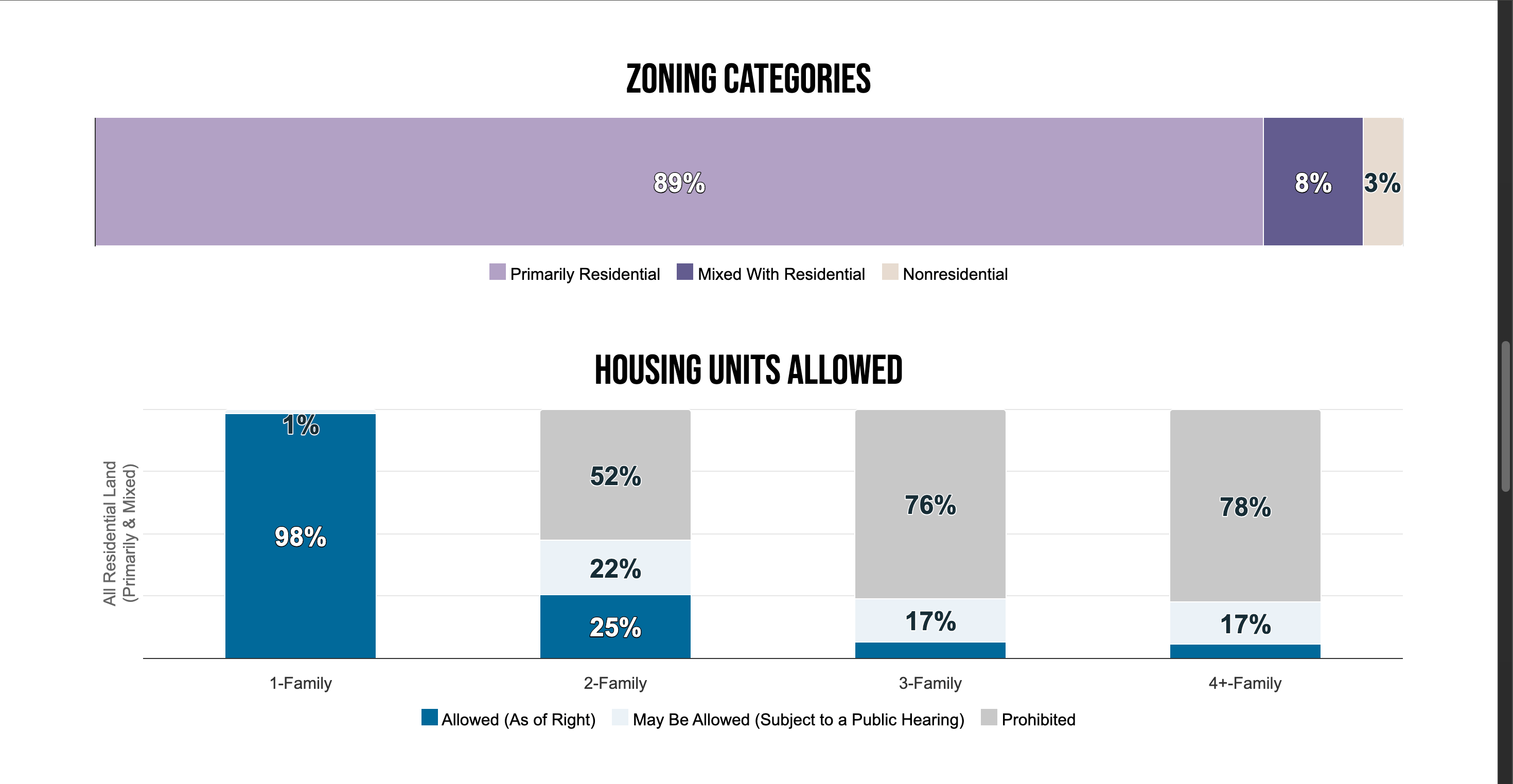
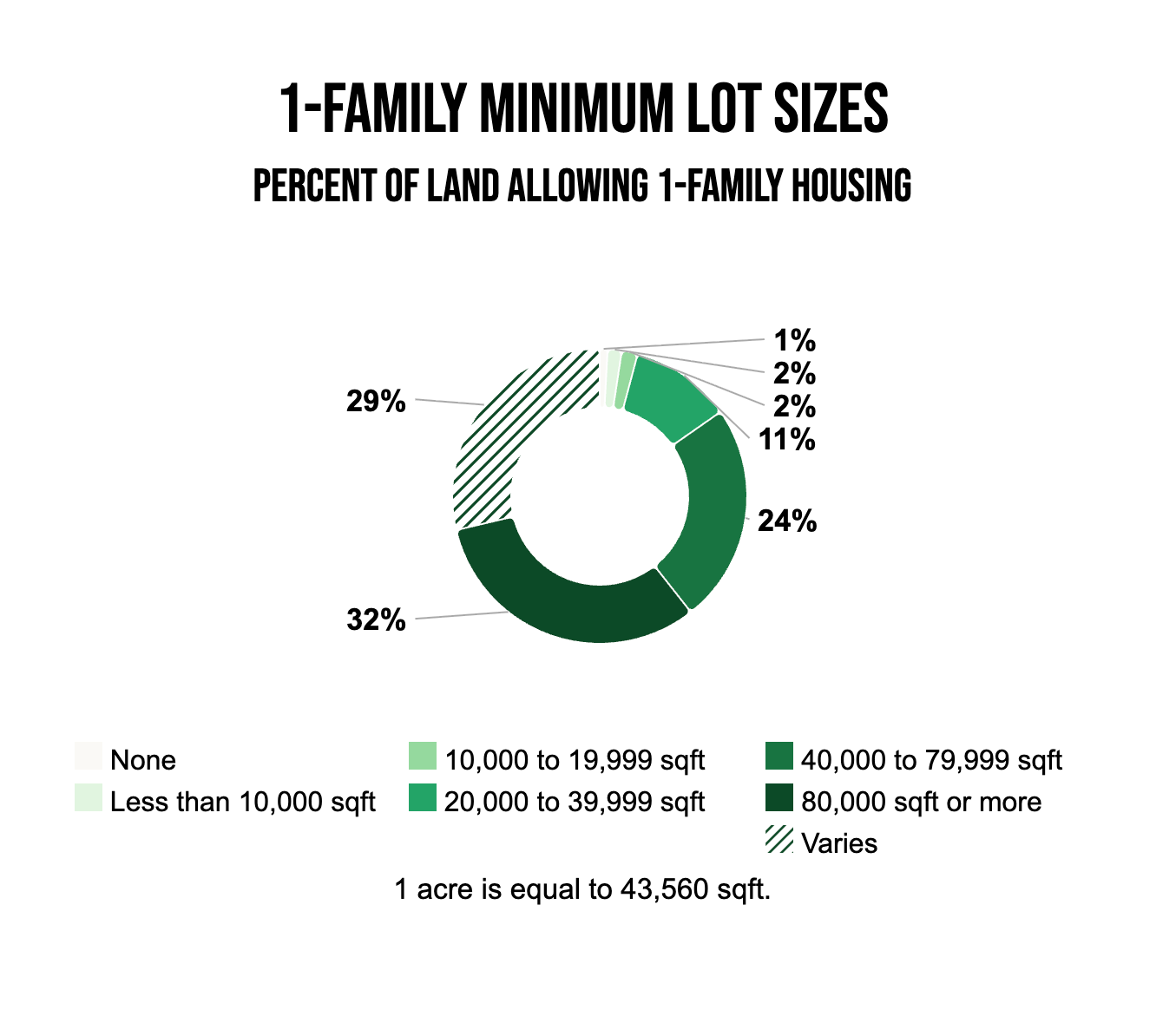
That code is just one of 292 zoning codes in the Commonwealth of Virginia. According to the National Zoning Atlas, about 73% of residential land in Virginia is zoned strictly for single-family homes. Of those, over half have minimum lot sizes over an acre, with 32% requiring a minimum lot size of two acres.
Putting aside the moral and constitutional injustice of a system that requires you to consume two acres of land for one house, if it took 10 years for a progressive, forward-thinking city to make modest progress toward a handful of form-based elements, how long is it going to take to get all of Virginia—let alone the whole country—to buy into these changes? Even if tinkering with our codes to reach a more enlightened version worked (and I’m not convinced it does), is it worth it when it will take another half-century to see meaningful change?
You may call me impatient, but if we’re going to pursue a five-decade path thinking we can “fix” the past mistakes of unenlightened codes and unenlightened planners, perhaps we should consider whether Euclid’s precedent will ever actually get us where we want to go.
The Great Deception
Many well-meaning planners and urbanists might react with horror at the prospect of losing the tools of zoning. Understandably so, as planners want to plan (it’s right there in the title). Taking away Euclid means taking away the profession’s tool belt and forcing them to find new methods.
But I would argue that Euclid has deceived us, convincing us that the tools we have developed are a way to create good cities. If we could just get the right zoning code, then we’d have all the things we want! We tell ourselves that codes exist to help us prevent what we don’t want (sprawl), and help us build what we do want (walkable neighborhoods). But this is the great deception of Euclid: the belief that it is a tool to build what we want. Only the latter half of the premise is accurate—zoning’s sole purpose is to prohibit.
Euclid created a fear-based institution built on years of complaints and concerns (I might add, usually from a select class of citizens whose voices are especially loud) about what might happen in their community. Its purpose is to prevent the outcomes that concern those select few, not to build a great city. As my friend Aaron Cook put it to me recently, “Zoning isn’t playing to win; it’s playing to not lose.”
Yet Euclid has convinced us that we can predict the future. That is no more true for zoning than for anything else. I am not convinced, after 100 years of the Euclidean experiment, that our efforts to predict the future are significantly more effective than they were before. If anything, they’ve become increasingly corrupted by the fear of change. Our codes are distorted by an ever-stacking list of amendments, adjustments, and rezonings as we realize that our efforts to predict and control the future are in vain.
What would a post-Euclid world look like?
Overturning Euclid means overturning its usefulness, to the extent it has any, on both the prevention and building fronts.
Yet there are plenty of arguments for how nuisance law would be better at preventing what we don’t want. M. Nolan Gray, in Arbitrary Lines, argues that freed of the shackles of exclusionary zoning, planners could serve as mediators in resolving disputes between neighbors. This topic could be an article in itself, but I would argue that any overturning of Euclid would likely leave some mechanism for preventing the most noxious uses—such as a factory in a residential neighborhood—as these pose real and substantive health and safety risks in a way that governing setbacks, density, and residential types simply does not.
More interesting to me, however, is the latter half of this question. How would cities respond in a way that helps build what we do want?
Freed from the shackles of select residents’ fears of change, cities could move towards building a substantive vision of what they can be. One of the biggest challenges Euclid created is a process of negotiation in city-building where the goalposts shift constantly. If a developer proposes a plan that needs special permission, the neighborhood and the city come back with counter-negotiations, extracting different designs, decreased density, and conditions. This negotiation is one-sided; neighbors can shift demands endlessly until the proposal is drawn out and dies. The issue is not necessarily that these demands exist, but rather that they are arbitrary, lacking clear, objective metrics for agreement.
If Euclid were overturned, cities would lose that stick, forcing a shift to a carrot-based approach. This is the most exciting prospect of a post-Euclid world.

Some cities are already doing this. Take the adoption of pre-approved plan sets, which allow developers to access architectural plans for free and skip permitting phases that would otherwise add cost and delay. You aren’t forced to use these plans, but you receive a significant advantage if you do. This effectively encourages developers to follow the pattern books and aesthetic guidelines the city desires by giving them a leg up over custom routes. These plan sets also decrease barriers for small-scale and first-time developers, who disproportionately suffer from the high costs and regulatory capture our current system encourages. This means smaller projects on smaller lots, creating greater affordability and more local wealth-building.
Another strategy is using public land for test projects. As Alicia Pederson recently noted, Chicago is using an RFP process that explicitly outlines a desire for more courtyard apartment buildings, going so far as to diagram the exact typology they want. They plan to select the best proposal and sell the city-owned property to the chosen developer. Using test projects is a great way to push the envelope and prove that a concept works.
Finally, there are design centers. Nashville’s Civic Design Center might be one of the best examples, hosting urban design charrettes, advocating for civic spaces, and getting the community involved in shaping the city’s urban form. This is a great way to identify and complete tactical urbanism projects, but it could also be expanded into the housing realm—working alongside pre-approved plans to improve site planning and urban form in the absence of zoning codes.
I won’t pretend that toppling Euclid will suddenly lead to an urbanist paradise in the United States.
Municipalities that don’t want to be urban will undoubtedly find other ways to enforce their will. But right now, our zoning regime leads to a lot of the same mediocre places repeated across urban, suburban, and rural landscapes alike. Without Euclid, that standardization will be removed, allowing places that are urban to be truly urban, and places that want to improve to enact policies that actually move them in that direction.
Sprawl will happen regardless. The goal of urbanism is not to dominate and defeat sprawl—it can’t, and it won’t. Rather, we need to increase the supply of good urban places. Defeating Euclidean zoning will widen the gap between the good places and the mediocre ones so that, with fewer artificial obstacles in the way, we can see what people truly prefer. I believe they’ll prefer good urbanism.
Overturning Euclid will require years of pushing the Overton window and recruiting more of what Jeff Speck calls “zoning abolitionists.” As Gray points out in Arbitrary Lines, being a zoning abolitionist by no means discounts the necessary, important efforts people are making across the country to incrementally improve zoning. In the short term, abolishing parking requirements and single-family zoning are necessary stepping stones toward that ultimate goal.
But we must continue to be clear: zoning will never build the city we want. Abolishing it might get us a step closer.
Eli Smith is the Director of Southern Urbanism’s Faith-Based Housing Initiative. He is a recent graduate of Dartmouth College, where he studied Religion, with a focus on the faith-based housing movement.

This essay does not distinguish North American zoning from zoning regimes in other parts of the world. Sonia Hirt's *Zoned in the USA* argues that North American zoning is unique compared to peer countries. Maybe we are uniquely bad at zoning.
Great Article! There's no question: Euclid must die.
Back in the post Euclid 1950s, suburban planners said “I know that car suburbs are the ideal lifestyle, I am going to encode it into law”.
Euclid was harmful not just because of the obvious stuff (single family zoning, ect), but for the deeper principled reason that it allowed personal preferences for development to be enforced on private property with police power
Urbanists that want to encode their development preferences into law - form based codes, objective design standards, architecture standards - are doing the same thing with a different font. Maybe with a better font, but still doing the same bad practice.
Good legal doctrine allows people to choose. It allows them to choose their lifestyle, their building form, their architecture style, ect.