

This essay is one of a five-part series analyzing American Land Use at 250.
250 years ago, this country was founded on a very, very strange idea. Though it’s become so fundamental to our lives we rarely think about it, the idea was profoundly counterintuitive: that we could use conflict and disagreement to build a better form of government that affords greater rights and more freedoms to a wider range of people than any that had come before it.
For all of history, conflict meant war, death, and destruction. Power struggles led to innocent lives lost and merely the shifting of power from one absolute monarch to another, with little improvement for the common person. The idea that conflict could be not only contained but turned into a productive force was an odd one. Succeeding in that task required fusing very old ideas of democracy with newer Enlightenment ideas that insisted people had fundamental rights which must be protected regardless of popular will.
The result is one of humanity’s greatest inventions: liberal democracy.
The United States today is still a liberal democracy, and one that has expanded to become more liberal and more democratic in a multitude of ways. Though liberal democracy is often associated with voting, politicians, and the federal government, I think it is also a helpful lens to look at a variety of ways we interact with our government and with each other, especially in building and running our cities.
In the mid-20th century, cities in America became dominated by an illiberal approach to urban planning. It was driven first by powerful and unchecked bureaucrats, then by powerful and unchecked public input. The vision sold by this era was one of perfect cities, free of dirtiness, crime, and unpredictability. They were to be perfect stasis chambers, ideal communities unchanged by time where the American dream could flourish. This vision was sold and resold to the American public as what they should come to expect from their built environment, codified not just by zoning codes, but by a planning profession eager to deliver this outcome and hardened by court decisions allowing cities to tighten their grip in order to execute the ideal system.
Yet this posed a core problem, and one we still struggle against today: utopian visions are fundamentally illiberal.
They operate on the premise that if we just give up a little more freedom, allowing greater enforcement of the vision, perfection will eventually be achieved. Yet the brilliance of the American system is that it acknowledges messiness, conflict, and struggle as an essential part of society. Indeed, the Constitution itself begins with the phrase: “We the people, in order to form a more perfect union…”
Not the perfect union, but a more perfect union.
The Container for Conflict
This country was founded on the most unusual idea that we cannot banish those we disagree with. The founders realized that there will always be disagreement and there will always be conflict. Human beings are messy, and denying that reality to pretend as though we can create a world in which everyone gets along will always lead to tyranny, where everyone is forced to “get along” in service of a false vision.
The brilliance of the founders was to recognize this and plan for it by creating a system of checks and balances, not to prevent conflict but rather to use conflict as insurance against any faction gaining too much power. At its best, this system enforces tolerance because it prevents an accumulation of power that allows intolerant views to be executed. Though you may not like your political opponent and their point of view, you are forced to tolerate it as there is no other alternative but to quit entirely.
The need for this tolerance grew not from an idealistic striving but from the unique necessities of life in the New World. Many of the American colonies had been established as an escape from religious persecution—Massachusetts Bay by the Puritans, Pennsylvania by the Quakers, Maryland by the Catholics—each of whom established their own colonies where they could practice their religion freely. For them to reestablish a system of intolerance similar to the one they fled was both illogical and impractical, as dissidents could simply leave and strike out into a seemingly endless continent to form their own settlements. Indeed, this happened almost immediately when the Puritans expelled Roger Williams in 1636, who simply established Rhode Island right next door and whose writings became a foundation for the separation of church and state.
As the colonies grew in size and approached revolution, none was large enough on its own to establish its religion as the national faith. I think we discount just how different the colonies, and the founders who came from them, were from each other. It was not as if they were simply from different states and different sects of Christianity that were roughly similar—they were from different countries, far apart, and with completely different religions. They were Catholics, Anglicans, Congregationalists, Quakers, Unitarians, and Deists with complex views that were not easily categorized. No faction had substantial enough numbers to dominate. If they were to “join, or die” as Benjamin Franklin put it—they would have to tolerate each other whether they liked it or not.
Yet toleration did not mean everyone agreed and held hands and sang kumbaya. They recognized that wherever there are two humans, there will always be disagreements and conflict. The problems arise when societies try to dispatch with their disagreements through violence, suppression, and forcing everyone to magically agree. Rather than pretending we could build some perfect egalitarian homogenous society, they figured out a way to create constraints on conflict that would lead to compromise, innovation, and gradual improvement. Liberal democracy is at its core a project to use conflict for improvement, to pit power against power in a contained venue that leads to building something better.
The Illusion of Perfection and the Tyranny of the Majority
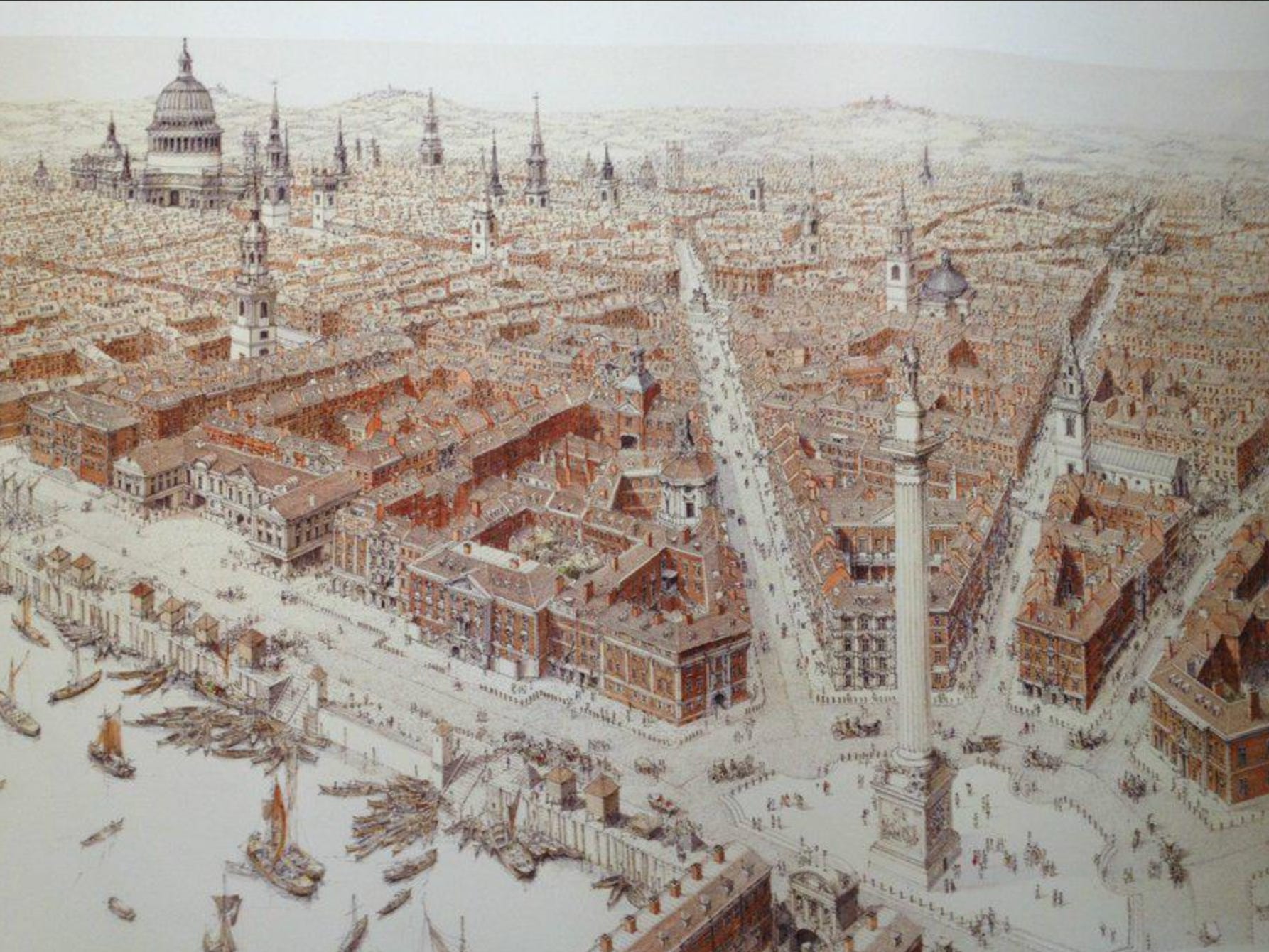
Most cities throughout history have been liberal. By this, I mean that they have evolved naturally over time through competing interests building incrementally. Though most civilizations have had some form of building codes, they frequently suffered from a lack of state capacity and bureaucratic might. This meant cities had to pick their battles wisely, usually prioritizing safety regulations and failing to meaningfully enforce regulation beyond that.1 Furthermore, living in societies with little to no expectation of personal freedoms, it wasn’t expected that you could complain about your neighbor being a pain. Much like the colonies, cities were tolerant not out of some high-minded ideal, but out of pure necessity.
Yet this created the dangerous conditions for an illusion of perfection to take hold, always promised but rarely delivered. Idealistic plans for London from Sir Christopher Wren after the Great Fire failed alongside many similar plans, but some, like Haussmann’s Paris, were brought to fruition as the illusion became attainable with increased state capacity. By the mid 20th century, it felt as though perfection was finally within reach, and the result is a story we urbanists frequently lament—the post-war turn towards automobile dependency, the carving up of our cities by freeways, the destruction of historic buildings, and the rigid segregation of uses. This planning regime was established under the guise of perfection and control, kindling for illiberalism. Though it happened ostensibly under a democratic system, there was a severe overreach infringing on property rights from powerful, unchecked bureaucrats like Robert Moses. It was a classic case of tyranny of the majority (aka, white commuters in the suburbs) trampling on scores of citizens in the name of the “common good.” Like all illiberal regimes do, it promised a sterilized world, free of the messy, smelly, dirty, and overcrowded cities of the past. It promised perfection and cleanliness if we were just willing to pay the small price of tearing our cities to the ground.
The result was a slew of Supreme Court rulings significantly empowering cities to tighten an iron grip around a range of issues whose impact on public safety is completely dubious. Enabled by rulings like Euclid v. Ambler (which celebrates its 100th anniversary this year) and Village of Belle Terre v. Boraas (1974), cities were allowed to determine not only where noxious uses are allowed, but also where on your property you can build, how big your house must be, how big your lot must be, and how many unrelated people are allowed to live together.2 The sum of these parts effectively enforced an illiberal vision of cities that were cleared of the “dirty” slums that happened to house people with a diversity of incomes, races, and classes.
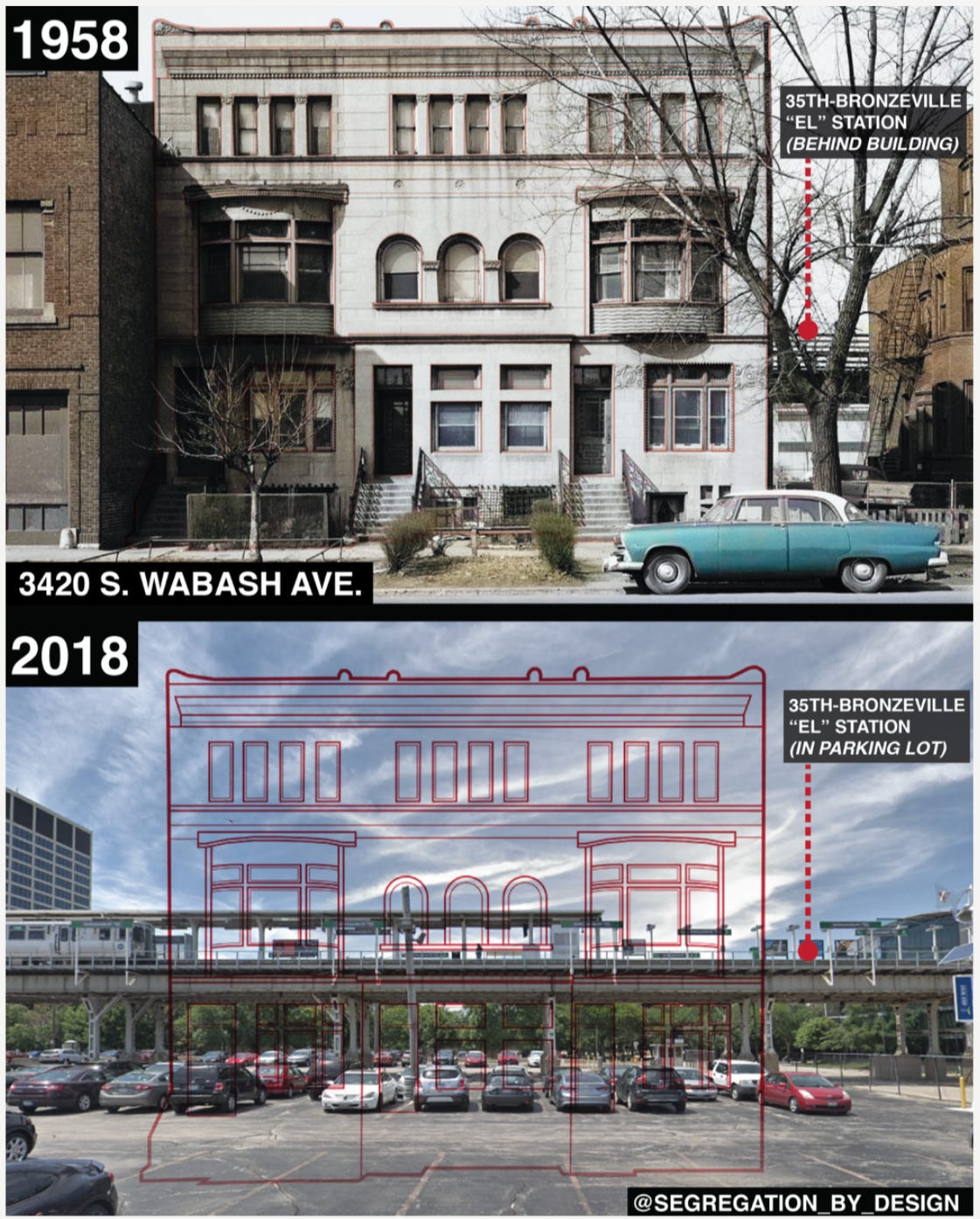
One might expect the backlash to the illiberal planning of the mid-20th century would have been to swing back radically in the direction of liberalism and embracing messy cities. But something odd happened instead: we replaced the tyranny of power brokers with the tyranny of the (seeming) majority. We formed a new illiberalism shaped by the loudest voices who could form endless committees, engage in limitless community engagement, and increase public input into every last facet of citybuilding. We’ve doubled down on the democratic part without properly balancing the liberal part, ensuring everyone gets a vote on everything that happens in their neighborhood.
Though we increased accountability, what we didn’t do is increase our willingness to put up with things we didn’t like. We’ve sold this vision that we can increase accountability and reach the same end goal of perfection and cleanliness free of conflict. Thus we tell everyone that if we just do enough input and have enough regulations on building articulation and design and facades and massing, then we’ll be able to build the perfect city.
I see a strand of thought amongst New Urbanists and classicists who believe that if something isn’t built in exactly the way they envision it, it shouldn’t be built at all. At the same time they bemoan how we’ve swung too far the other direction in public process, they seek to impose a top-down master-planned vision that maintains cleanliness and architectural uniformity. But this strand of thought, though on the surface swapping car-centric approaches for pedestrian-oriented ones, is still descended from the core deception of illiberal 20th-century urban planning. It does not acknowledge (nor replicate) the fact that real cities are messy, difficult to control, often dirty, smelly places where you are forced to tolerate those you may not like or agree with.

A Tolerant Revolution in Citybuilding
The threats to liberal democracy in the United States and across the world seem to be numerous and plentiful at the moment, and the application of their ideas onto city planning seems like a small part of the larger picture. But the places we live deeply shape who we are and what we believe. If we can’t be tolerant toward the places we live, can we be tolerant towards anything?
Do the systems and changes we advocate for acknowledge competing interests and the inevitable conflict of more than two people living in a place? Do we adequately hash out those conflicts in a productive manner? Do we allow for the messiness of organic places, and even encourage it in recognition that the real places people love are granular, gritty, and oftentimes have plenty of imperfections? It is not that we need to adore these imperfections, but rather that they are a natural consequence of an organic being. We can use them, much as the founders used conflict to create a better nation and to create better places.
What this will require:
1. Bold leadership from elected officials. There are times for deep community engagement (mostly during an election), and there are times for bold, decisive action. Finding the proper balance is the whole ballgame when it comes to good governance. In Federalist 70, Alexander Hamilton wrote in favor of a unitary executive over a plural executive because the focus of accountability is clearer when there is a single person to aim it on. He argued that a unitary executive creates clear energy for decisive action. In other words, Hamilton feared ruling by committee would lead to slow decision-making and a lack of clear accountability. Our best leaders have taken this to heart, making bold decisions with recognition they would be held accountable if they went awry. In the words of Harry Truman, “the buck stops here.”
2. Humility and self-restraint from citizens. Accept that your city will always have some ugly buildings you don’t like, some poorly maintained yards, and some trashy neighbors you wish would make their house nicer. But by focusing on these minor issues, we often miss the forest for the trees, micromanaging the city into oblivion while failing to rectify much larger problems like the lack of housing, wasteful land use practices, and a billion other issues that are far more pressing. Change is inevitable, and we often don’t have control over it. Our job is to encourage good change, rewarding actors who lift up their community and genuinely make an effort, not to get our two cents into every last decision.
3. A restoration of trust. This is the hardest thing of all, and there are very few good answers. On this 250th anniversary, it often feels like the bonds of trust that hold us together on every level, from national to local, have broken down. Every element of our lives from our neighborhood coffee shop to new housing has become part of a larger global financialized corporatized system, which we rightly don’t trust. People are naturally more trustful of those they know than those they don’t. If we are to restore trust, we need to foster localism.
The word liberal originally comes from the Latin word liberalitas, a Roman virtue that denoted generosity and civic duty as much as it did freedom. It was not the freedom to do whatever you wanted, but rather the freedom to do the right thing, to serve your community and build a better society. People were given the power to act with the trust they would make good decisions, and if they didn’t they would face social, financial, and political repercussions. As our world has expanded, the trust that forms the foundation of liberalism and tolerance has become harder to put faith in. Without it, not only do we face political consequences, but it becomes difficult if not impossible to build the cities we all want to live in.
As we reach this 250th anniversary of the United States and of liberal democracy itself, I think there are a few glimmers of hope. The YIMBY movement in particular offers a voice to loosening the grip and allowing cities to evolve naturally. Alongside it is the reality that our current planning stranglehold has worked for an older generation in a way that it can never deliver for younger generations. As power transitions to a new generation, perhaps the vision of the perfect, clean cities propagated in the 20th century is finally giving way to the realities of endless sprawl, traffic congestion, and placelessness.
If we are to renew American cities, we must acknowledge that the approach offering a utopian vision is a fundamentally flawed one. We will never build a perfect city—but by reviving our tolerance for one another, we can get back to the messy, productive work of building a more perfect one.

Eli Smith is the Director of Southern Urbanism’s Faith-Based Housing Initiative. He is a recent graduate of Dartmouth College, where he studied Religion, with a focus on the faith-based housing movement.
Do not get me wrong—that did not mean there were no efforts for planning. It is unavoidable to mention the gridded plans for Philadelphia, New York, or Savannah. These plans were a structure through which cities could be built, laying out urban designs while still in the era before state capacity could keep up and strangle the city. Rarely, however, certain states did have the capacity to execute their visions for monumental plans, perhaps most notably with Haussmann’s Paris. The level of both wealth and power necessary to execute these visions made them rare in their success prior to the 20th century.
In my city of Richmond, VA, the magic number is 3 unrelated people. There is absolutely no public health purpose to this (there is a separate state health code for that), nor any real justification given. In my mind, this is an outright violation of freedom of association conveyed in the First Amendment.
I've noticed an interesting additional development in urban planning newer than the public input model, and that's the tyranny of the planned development model. Basically, development has become so locked down that the only feasible developments are the large-scale planned developments by private corporations. These create artificial town centers that are entirely privately owned, which is about as illiberal as it gets. The city can't kick you out of downtown, but a private town center absolutely can.
While these ostensibly have to pass some public scrutiny through Planning and Zoning staff and related commissions and councils, the project is usually so large in scope, and cities so desperate for any development at this point, that they mostly just skate by without much scrutiny (if they aren't getting subsidized to heck and back in the process). So in a weird way, we're back around to a very top-down undemocratic model.