

This essay is one of a five-part series analyzing American Land Use at 250.
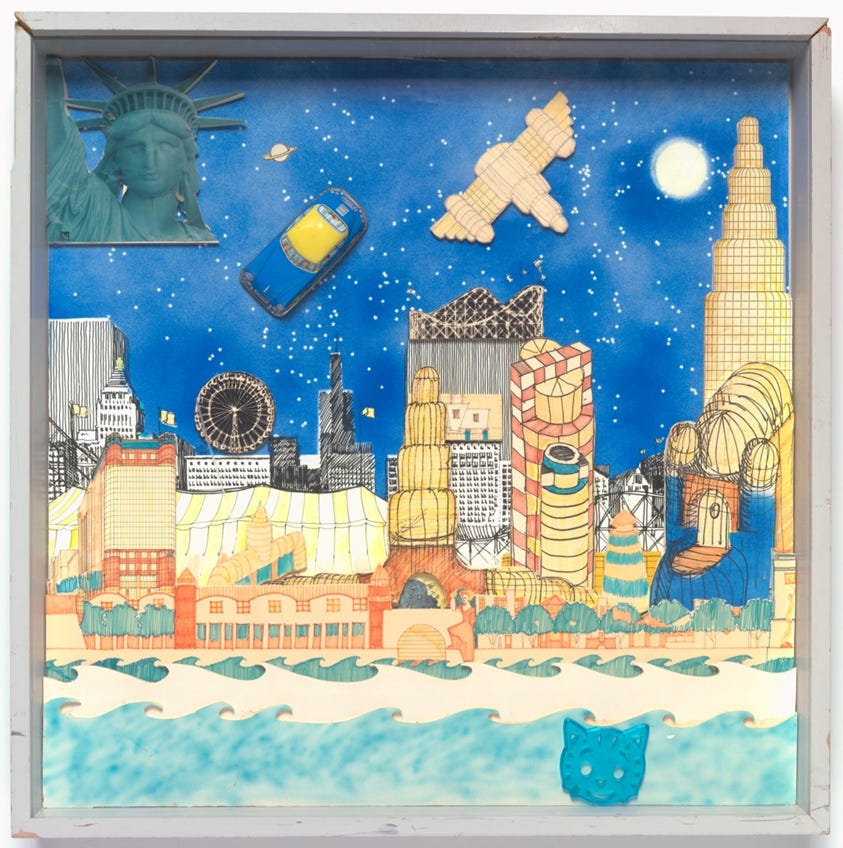
We have it in our power to begin the world over again
–Thomas Paine
The Argument Over the Map
Urban planning, like democracy, is a battle over imagination, a battle over the map of our future. Our country was founded on the idea that we could become something new. Since its inception, our country has been argued over ever since.
In council chambers across the country, we argue over the future of our communities. We argue about transportation, urban development, and property taxes. Some of us imagine the future of our neighborhoods as different, others as more of the same. What we imagine leads inevitably to disagreement, to petitions and political campaigns, sometimes to council hearings that run until midnight.
Urban planning seeks to do good things. It is a profession full of people who dream of a better future. But any dream creates a spark that can ignite a community. A dream alone is an invitation for debate, disagreement, and conflict.
We are at all times arguing over what our country was, is, and can become. It is difficult to write a concise celebration of a country vast, complicated, and built on the dreams of millions. As Yoni Appelbaum said in a recent essay, “it’s our 250th birthday, and no one seems to know what we’re celebrating.”1
When I ask myself what it means to be American and what I’d like to celebrate about our country on its 250th birthday, I keep coming back to imagination. It is a force both monumental and personal. It played a huge role in founding and changing our country over the past 250 years. It’s also what led me to urban planning and writing.
When I look back on my life, I see that I had been training for a long time to see the world anew, to keenly observe what was there, and to imagine a version of our world that didn’t yet exist.
Exploring the Map
Only in hindsight do I have a legend to understand my own map. When I was a kid, my action figures were everything to me. The thrill of opening the package on a new toy was awesome. I was infatuated with their designs and accoutrements. But more important than looking cool, they were a portal to another world. They helped me turn crumpled bed sheets into mountainous terrain, a rug into a lake, and a coffee table into a henchman’s headquarters. They invited me to see what wasn’t there, to imagine a world that did not exist.
It was a sad day when I realized I was probably the only one in my friend group that still played with action figures. I remember thinking it might be best for me to move on. And on a day I don’t remember and didn’t plan for, I put my action figures away for the last time.
But alas, I found a new toy, one that would turn my imaginative gaze out on the world: my first skateboard. Like a traditional sport, skateboarding requires you to see yourself doing things you can’t do yet. But unlike tennis, basketball, or football, what you imagine yourself doing is not limited to a court or a field. What you imagine might be possible requires reimagining the world. Before skateparks existed, skateboarders—or sidewalk surfers—saw concrete waves in California’s drained pools.
And when street skateboarding evolved with the ollie, allowing you to jump with your board, no hardscape in the world lacked inspiration. Anything from a curb to a handrail became fair game. Where most people see mundane infrastructure, skateboarders see possibility.
A city to a street skateboarder is a mental map of skate spots. And a skateboarder is always on the hunt for a new spot to add to the map. This thirst for something new, the excitement found in something as boring as a loading dock or an abandoned factory, leads skateboarders to weird places. To ensure no stone is left unturned, no spot missed, skateboarders find themselves exploring parts of the city they might not otherwise go. They go into the industrial district everyone drives past, the rich part of town others find too snobby, and even poor or dangerous neighborhoods most avoid.
Any street skateboarder has covered more ground than the average citizen. Before I ever watched Steven Duncan’s exploration of New York City’s abandoned subway lines, I was doing my own version of “urban exploring” despite not knowing the term. In my time exploring all corners of the city, I saw things that wouldn’t make sense until later.
Learning the Legend
Some people know what they want to be when they grow up; or, if they don’t, there are signs. The obvious urban planner signs weren’t there for me. I wasn’t big on Legos. I never built model trains. I had no interest in SimCity. But my hobbies were secretly preparing me to think critically about the built world. Playing with action figures taught me to imagine what didn’t exist. Skateboarding extended that into the world and, in the process, revealed the social and physical patterns of American urbanism. As it turns out, I had long been practicing the fundamentals of urban planning: to recognize patterns, to see the past’s legacy in the present, and to imagine something new.
My education is what gave me a legend for what I spent years observing: abandoned factories belonging to an industry long gone, train tracks that divided rich from poor, oppressively fast and dangerous roads that threatened my life while on foot, skateboard, or bike. My education on history and urban planning taught me how to understand the data I had been accumulating.
I learned that American cities held layers of legacies from the past—some good, some bad. Washington, DC is blessed with Pierre Charles L’Enfant’s street plan that blended small-block urbanism with radial arterials. New York inherited a bold commitment to urban parks in the form of Frederick Law Olmstead’s beautifully designed Central Park and Prospect park. Those legacies are still with us today. Others have been demolished. One hundred years ago, I’d be able to hop on a streetcar blocks from my house and ride it to Downtown Asheville. Now those tracks lay buried under asphalt.
Unpleasant legacies persist as well. Atlanta’s zoning code still refers to accessory dwelling units as “servants quarters.” A reference in name only, it accompanies a legacy of inequity that has been difficult to change. Atlanta has been previously ranked as having the worst income inequality in the country.
The cities we’ve inherited hold a record of ideas, perhaps not a single one uncontested. Some ideas— urban renewal—have been abandoned. Others—streetcars—are hoping for a comeback. Some that feel as American as apple pie—single-family zoning—are increasingly contested. Cities are host to traditions whose value is debated and lost forms of city building that some want back. The American city was, is, and always will be in flux.
My education taught me to read the city as a palimpsest of maps, each with its own dream of what a city should be. The legacies of some maps have left us better off, while others have left wounds unhealed.
Mapping New Territory
Reading a city requires you to acknowledge both legacies, the good and the bad. To envision a better future, you have to understand what’s holding it back. Thomas Paine’s Common Sense, the famed pamphlet that encouraged our nation to dream of independence, claimed that “we have it in our power to begin the world over again.” This was not only a proposal for a new republic but a rebuke of monarchy. Likewise, Jane Jacobs not only dreamed of a world with bottom-up, incremental development but of a world without top-down, modernist planning. Turning points in American history have been defined by an expert pairing of criticism with imagination.
In his famed Fourth of July address, Frederick Douglass implored us to think critically:
“The feeling of the nation must be quickened; the conscience of the nation must be roused; the propriety of the nation must be startled; the hypocrisy of the nation must be exposed; and its crimes against God and man must be proclaimed and denounced” (p. 366).
Douglass argued that before a wrong can be righted, the wrong must be felt. A hundred years prior, Paine understood this, for he said that “A long habit of not thinking a thing wrong gives it a superficial appearance of being right.”
The job of a planner, and the job of a writer, which I feel compelled to do, is to question the familiar. In the words of Nathaniel Hawthorne, the job is to, like moonlight, cast “a beautiful strangeness in familiar objects.”2 In order to create the world anew, we must see the present in a new light. To really want change, to feel it in your bones, you must think it more right than the present.
It’s difficult for me to untangle my role as a planner, a writer, and an American. I see them all propelled by the same desire to illuminate the possibility of a better world. America won’t ever be a single, clear map. It will be multiple competing and overlaid maps, our country full of cartographers charting courses for themselves, their community, and the country at large. Honestly, I can’t think of anything more American. The most patriotic act we can undertake is to dream of a better country.
Southern Urbanism is supported by James Hardie and readers like you.

Nick
Billy Cooney is an urban planner and writer living in Asheville, NC. By day, he organizes public events for Downtown Asheville and his neighborhood, Five Points. By night, he writes essays and book reviews, drawing on his experience in public and private sector planning to understand the space between idealism and implementation. His essays have appeared in local and national outlets, and he publishes regularly on his Substack, Flâneurbanist.
“How to Tell the American Story,” The Atlantic, July 2026, p. 30.
“My Kinsman, Major Molineux,” Nathaniel Hawthorne. See also John Swansburg’s essay in The Atlantic (July 2026), “Nathan Hawthorne’s American Horror Story.” He shows how Hawthorne’s story questioned the self-righteous mythology of the American Revolution.
It's really had to imagine a future when you don't really understand where we are today. I think about the David Foster Wallace story "This is Water" more than I probably should. I often find myself shining moonlight on how things are to my friends and family, asking them "How's the water?", whether it's road violence, disconnected communities, or our city frozen in amber. Many times, it's just the backdrop of America 250, hard to really see a new way forward. Thanks for sharing Billy.