This essay is the final of a five-part series analyzing American Land Use at 250.
“The myth of eternal return states that a life which disappears once and for all, which does not return, is like a shadow, without weight, dead in advance, and whether it was horrible, beautiful, or sublime, its horror, sublimity, and beauty mean nothing.”
Milan Kundera, The Unbearable Lightness of Being
Ward I. The Port
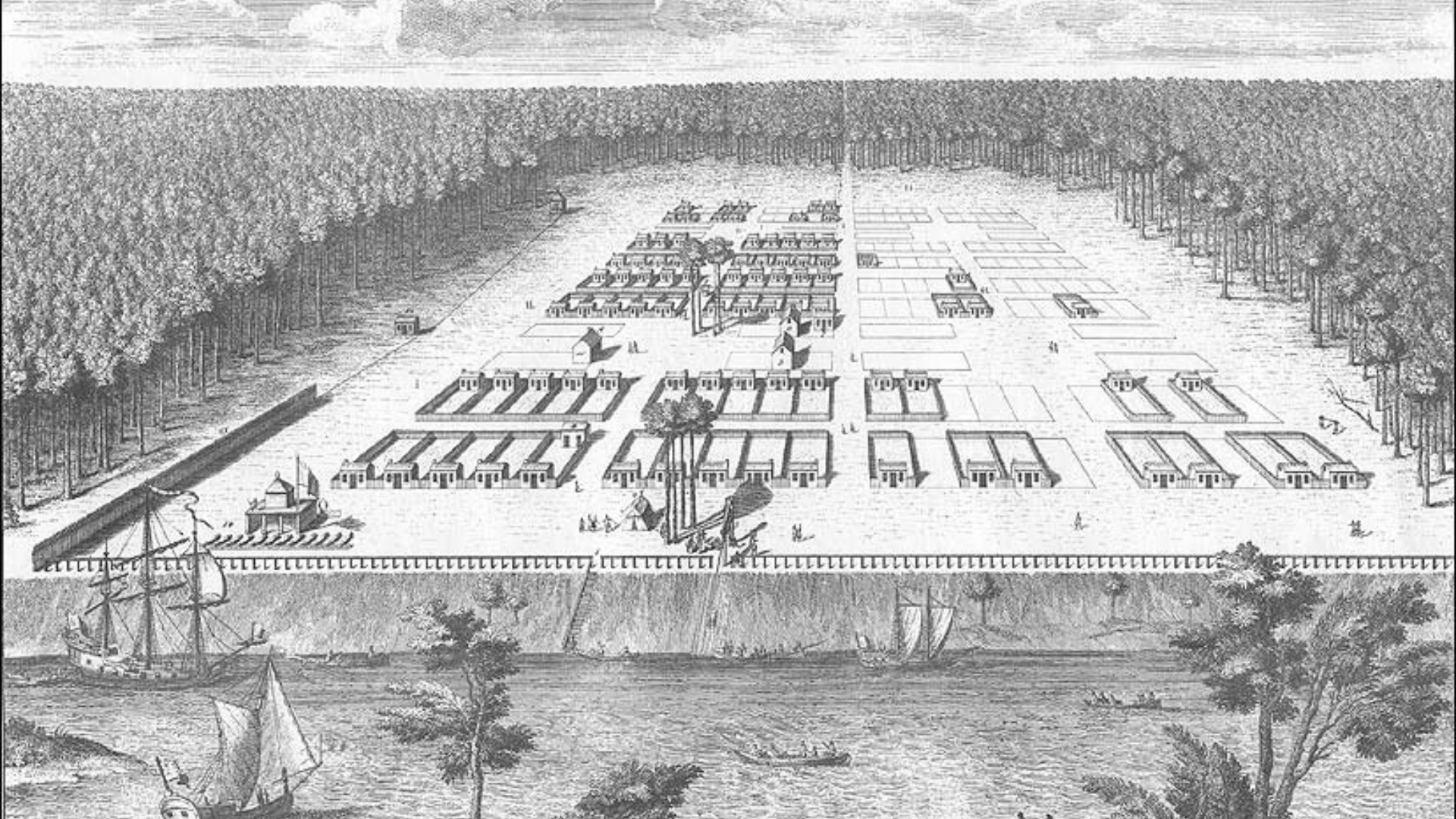
In 1733, a man named James Oglethorpe stood on a bluff overlooking the Savannah River and drew a grid. He gave the city of Savannah, Georgia a fractal, modular plan. It’s divided in twenty-four identical wards, each anchored by a public square, each square surrounded by four Trust lots for civic buildings and four tything lots, each with ten residential parcels of sixty by ninety feet. Every ward a copy of the last. Every citizen, in theory, equidistant from a park, a church, a place to gather. And yet every square and every block is unique and unrepeatable.
He created a haven where the poor and indebted could have access to property, incidentally a key tenet of the Fundamental Constitution of Carolina, written by one John Locke, who had brought his ideas on private property, limited government, and natural rights across the Atlantic.
A few centuries later, sheltered from the heat and the Spanish moss dripping from live oaks outside, with sweaty palms and full of excitement, I sat at orientation in a ballroom in a haunted hotel turned dormitory, along with one hundred other international students. I clutched in my hand the map of the city, the key to Oglethorpe’s mind, that had been reduced to a cartoon, printed on a sheet of paper, and distributed to every other student in the room.
I was twenty-three, fresh out of Design school and a new arrival in what was one of the most important American ports before the Civil War, and one of the best preserved historic districts in the nation. I did not know then that Oglethorpe’s dream was to create a place where people could start over.
Savannah shaped much of my view of the America I now call home. Few other places in America can teach architecture and history the way Savannah does: not in a classroom, but on foot, square by square. It was a privilege to be immersed in a culture that values hospitality, elegance, and tradition.
The South feels the nation differently. It carries history in its bones, both the brutal and the beautiful. It had decided to remain charming despite everything. And I’ve never felt more welcome, more at ease, and more like I belonged.
From the vantage point of a quarter century, and three American regions later, I feel that I’m barely still on the outside. I look at these United States as she turns 250, and gather my thoughts about the horror, the beauty, and the sublime shaping the American Dream as it turns 406.
Ward II. The Idea
The man who invented the idea of the “American Dream” had roots in Latin America. James Truslow Adams, the Wall Street investment banker who wrote The Epic of America during the worst economic collapse in our history, in 1931, was the grandson of a Venezuelan woman.
In his Epic, he introduced the concept of the American Dream as “that dream of a land in which life should be better and richer and fuller for everyone.” He described what every pilgrim, every colonist, immigrant, and frontiersman felt as they saw the vastness of the land, and seized it.
In hindsight, it reads as a desperate rescue operation, to remind his fellow countrymen that this was still the best place in the world for any person, regardless of birth or class, to reach their fullest potential.
Adams’ concept of the American Dream as “not a dream of motor cars and high wages merely, but a dream of social order in which each man and each woman shall be able to attain to the fullest stature of which they are innately capable” is reminiscent of Oglethorpe’s enterprise. The same map, drawn again, two centuries later.
For Adams, as for many commentators of American life who have come after him, the dream has disappeared once and for all, like a shadow, many times. And yet, it didn’t. It returned, as it always does.
Ward III. The Grid
Every city that survives breaks its own wall. The wall comes first. Every founding needs an edge. But the city that matters is the one that outgrows the line it drew for itself. Only a broken wall lets the next person in.
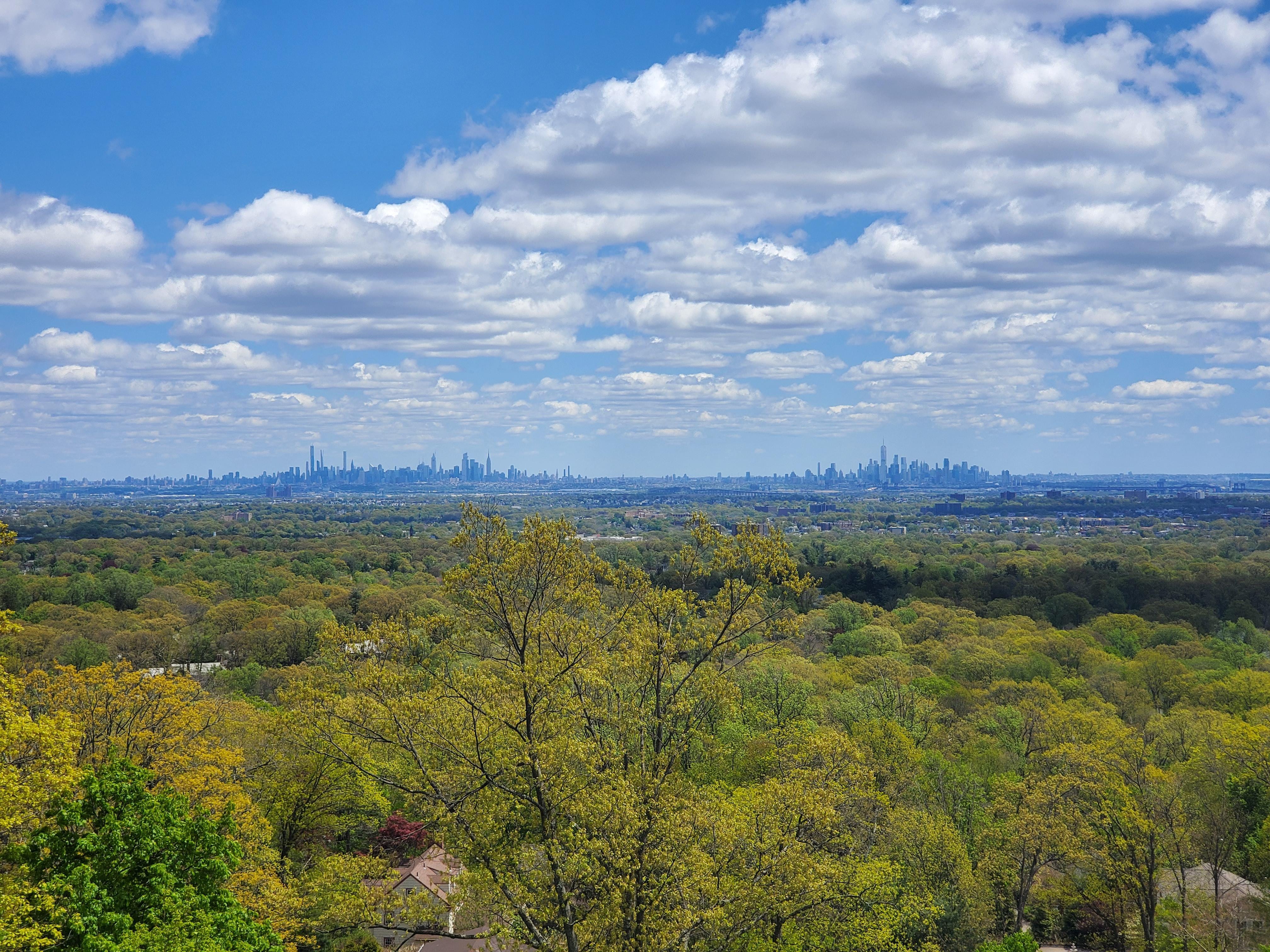
The 9/11 memorial in West Orange NJ stands at the top of Eagle Rock in the Watchung hills, overlooking Manhattan. It was called “First Mountain” by the Lenape and it is, in fact, the first range that rises inland from the Hudson River. A narrow, winding road leads up to the top, away from the bustling streets of downtown Montclair.
The first time I stood on that hilltop, looking yonder at the Manhattan skyline, I thought about how a city’s energy can be felt from miles away. I was using that view to reassert myself that everything was within reach, just as the Lenape had used it to make sure their smoke signals reached far enough, and just like the Continental Army scouts had used it to keep track of English movements in the New York Harbor. The cartoon map I had been handed in Savannah did not show any of this. The map looked different in their company. More hopeful. More reachable.
I am here because someone, at some point, decided the wall was a suggestion. What drew me to this corner of the Northeast was the old American urbanism of human-scaled main streets, Olmsted parks, and heavy, arched railroad bridges, still rather untouched by the grand urban operations of larger cities. Traditional New Jersey main streets have branches, they are just small enough, just chaotic enough for old buildings and new ideas to live together, closer to the heart of New York City than many places within the five boroughs. And closer in mindset, too.
The 1811 Commissioners’ Plan of New York drew a juggernaut grid that brought modern order to the lace-like, organic urban landscape of New Amsterdam. They mapped streets over farms, forests, and futures that hadn’t happened yet. This is America’s great act of faith and audacity: planning for a population that didn’t exist yet, for a greatness that was still hypothetical.
The Dutch have a verb: “polderen”. It names the collective act of building a dyke, where one person’s failure floods everyone and so no one lets it break on their watch. A polder is land taken from water, held by agreement. The logic crossed the Atlantic with the people who founded New Amsterdam. Lower Manhattan is, in a sense, the first American polder. A beautiful metaphor of pride, human action, and collaborative building. It undoubtedly shaped Lower Manhattan, and the mindset of the entire region: commerce, industry, and the pursuit of dreams.
Many Dutch cities have maps like New Amsterdam’s. We have a Wall Street and a Water Street and a Broadway to remind us of the contrast between adapting to the terrain, changing what we must and keeping what we can, and the numbered dominance over the land that sees no nuances and imposes an orthogonal geometry never found in nature.
I go back to Eagle Rock often. On clear days, you can see the whole skyline and imagine the grid from the ground level. New York City’s bustling energy is an argument and an inspiration. The people who infuse life into those streets and avenues refuse to live in a placeless, overwhelmingly repetitive grid, and make an audacious proposition: keep building, don’t stop. From up here it looks like a map drawn for people who haven’t arrived yet. The wall is always somewhere behind them.
Ward IV. The Palimpsest
A palimpsest is a page used twice. Medieval scribes, short on vellum, would scrape an old manuscript clean and write a new text over it. The older ink, never fully gone, would surface again over time, faintly, behind the newer letters. Two texts on one page. Sometimes three. A document that held everything anyone had ever written on it, whether the next writer wanted it or not.
America is a country of palimpsests. Every place that gets written on by enough people becomes one. The page does not get erased. It gets denser. The earlier arrivals leave their letters behind and the later ones write between them. After enough generations, the page is so full that the city’s character is no longer any single text. It is the accumulation. The reader walks through the page and reads everything at once.
Miami was our gateway. The place where our commitment with the American Dream was sealed.
Miami has been written on so many times, by so many people arriving with nothing but a direction, that the page is now denser than any single hand can read. Flagler’s railroad town is still there. So is the 1920s land boom. So is the Cuban exile city. So is the tech capital being built on top of all of it. Nobody looks up when you start over in Miami because everyone is starting over, and everyone before them did too. A city of a million private maps, each one a life, each one a bet placed on the same proposition: that this is the place where the thing you’re building will hold.
Miami was where my family first lived when we moved to America. Whenever I had a few minutes to spare for a trip downtown, I biked the Venetian Causeway. The road was built in the 1920s, during the land boom that gave the city its first soaring skyline. The Art Deco gems along the route are from the same era. The boom collapsed, the developers moved on, and the causeway is still there.
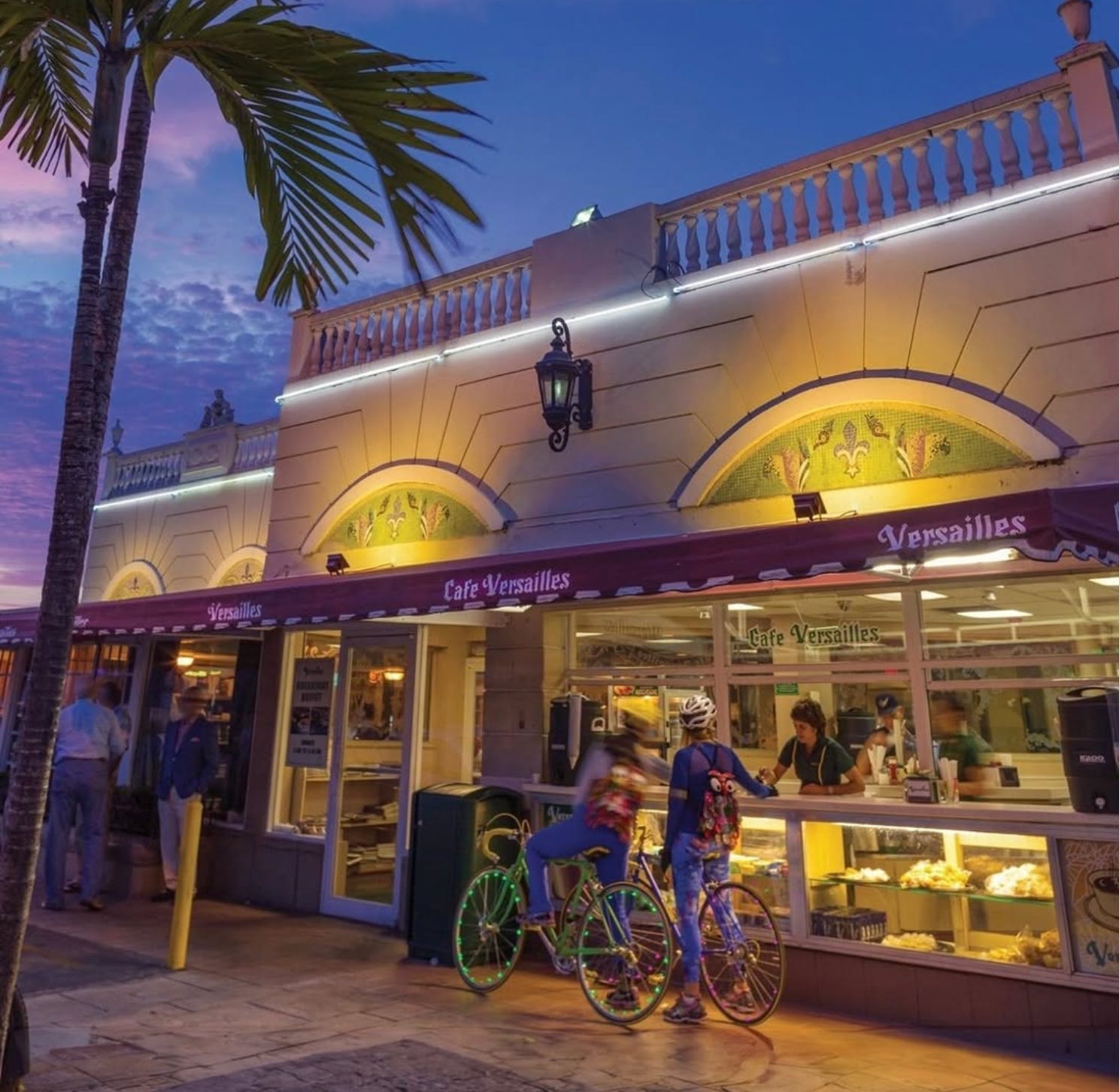
In downtown Miami, there are countless quintessentially local sidewalk service windows that serve “colada” the way only Miami Cubans can prepare. A thimble of super-sweet Cuban coffee that connects you to one of the worst kept secrets in town: everybody got equalized by force when they left, but those with the will remade their fortunes this side of Key West. And those hungry enough made new ones.
That’s the Dream at street level. Not the fancy cars. Not the luxury beachfront properties. The window. The thimble. The certainty, small but load-bearing, that you are in a place where a bayonet wouldn’t stand between you and your property, and where what you build will be yours.
We live in Jersey now. The page in Miami is still being written and we added our piece to it before we moved north. My son is growing up in a country I chose for him, in a language he speaks without an accent, in a neighborhood where his options are so numerous they appear to him simply as Tuesday. He will write on it in his own time. Whatever city he ends up in, the ones who were there before will have left him something to read and something to add. That is the dream. Drawing our own map.
Ward V. The Survey
America turns 250 this year. By the standards of the civilizations that came before her, the Greeks, the Romans, China, she is barely out of adolescence. The Lenape sat on Eagle Rock for centuries before the first intentional cities were even drafted in America. Spain had founded over a dozen universities before the Trustees created Harvard, our first.
And now we are getting ready to be an interplanetary civilization. Two hundred and fifty years is barely an introduction.
And yet.
In those 250 years this particular experiment has gifted mankind something no other civilization has come close to creating. The Pilgrims drew the first communities out of nothing but covenant and weather. Jefferson drew the first laws of a country that had not yet been governed. Oglethorpe drew the first wards of a city that did not yet have citizens. Flagler drew the first railroad into a swamp and called the place Miami. Each of them planned for a population that didn’t exist yet, for a greatness that was still hypothetical.
What America keeps producing, and cannot stop producing, is a renewable Dream. One that disappears and returns. One that each generation finds waiting. Still open. No explanation required. For the takers.
Here is what I have learned from the outside, looking in, in twenty-five years of making America my own. The Dream is American by principle. Every time it should have died, in 1776 when the odds were impossible, in 1861 when brother stood up against brother, in 1931 when the odds were so bleak that they inspired Adams to write its eulogy, someone arrived and believed in it harder than the people who were too eager to call its demise. The Dream is renewed by belief, and belief is renewed by arrival. The two are the same engine running on different fuel. Americans, native and new, like me, who believe in the principles the Founders left us, who contribute to the edifice, are the mechanism by which the Dream will survive in perpetuity.
What makes this country different from every other experiment in history is not its bountiful resources or its geography or its wealth. It is the fact that the system was designed to encourage the person who came next to aim higher, build stronger, last longer, and serve better than the person who came before. Every line on a map, every factory, all of it built for a future that was reachable thanks to a level of trust and certainty that no other place on earth has been able to provide. America is the only country whose founding documents are addressed, implicitly, to people who have not yet arrived.
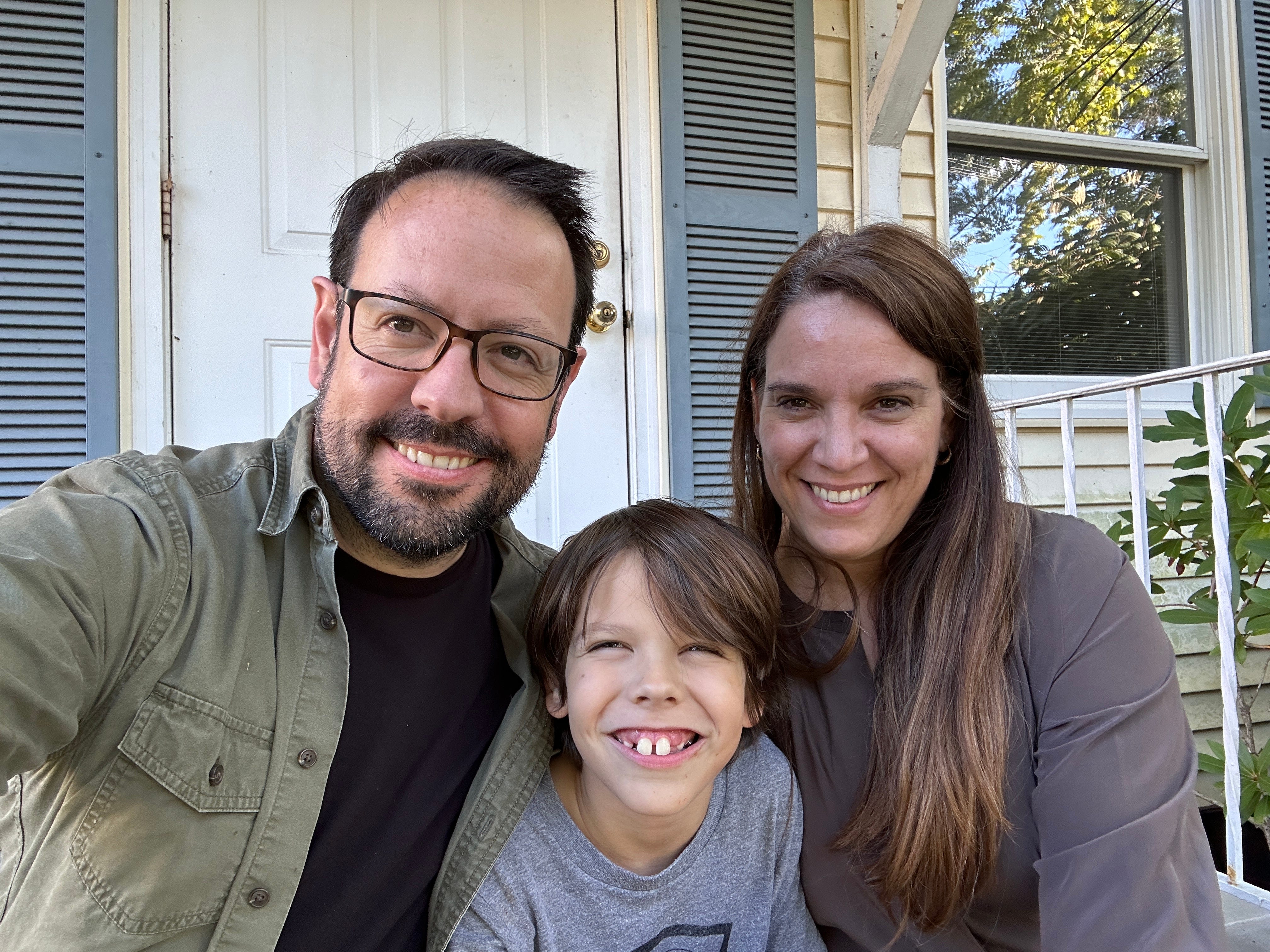
I sat on the stoop of my wife’s business in our quaint, very walkable, little Jersey suburb the day we signed the papers. Just sat there, in front of the door, looking at the street. I don’t remember what I said out loud. What I thought was something close to: this is ours. Not profound. Not eloquent. But it contained everything. Every sweaty-palmed orientation room, every colada through a window in the Miami heat, every morning on the Venetian Causeway, every evening on Eagle Rock watching the grid hold itself together below. Seven years after taking the leap, both my wife and I had businesses we loved that started from ideas, with zero money, in a country that had no obligation to see us succeed but did it anyway because that is what America does.
That is not a dream of motor cars and high wages. That is a person reaching their fullest stature on a stoop in New Jersey and knowing it in real time.
My son will stand on that stoop someday, or one like it. He will have his own stories, his own city that asks nothing of him but the willingness to show up and build. He will not know, when it happens, that Oglethorpe felt it on a bluff above the Savannah River, or that Adams felt it at his desk in 1931, or that I felt it on a stoop in front of a door that had just become ours. He will just feel it. The weight of it. The realness of it.
That is the eternal return. Not repetition. Weight. The American Dream has been lived too many times by too many people to mean nothing. Every life built inside it adds mass to it, makes it more real, more true, more inevitable for the next person who comes up with a plan and nowhere else on earth they’d rather be.
This map is not yet finished.
My son hasn’t drawn his part yet.
Southern Urbanism is supported by James Hardie, and readers like you.

Jaime Izurieta is an Architect, designer, and urban development consultant, founder of Storefront Mastery. He is the author of Main Street Mavericks and The 10 No-BS Rules For Successful Storefront Design. He has founded a city, a museum, and an architectural practice, planted a few trees, rehabbed a 100-year old farmhouse, co-owned an independent bookseller, worked in the public and private sectors, and taught architectural design studios at university. Jaime writes on Substack at The Vertical Sidewalk.