


“Government is instituted to protect property of every sort; as well that which lies in the various rights of individuals, as that which the term particularly expresses.”
James Madison, Property, 1792
HD-1. Historic Overlay (Landmark Decision, est. 1926)
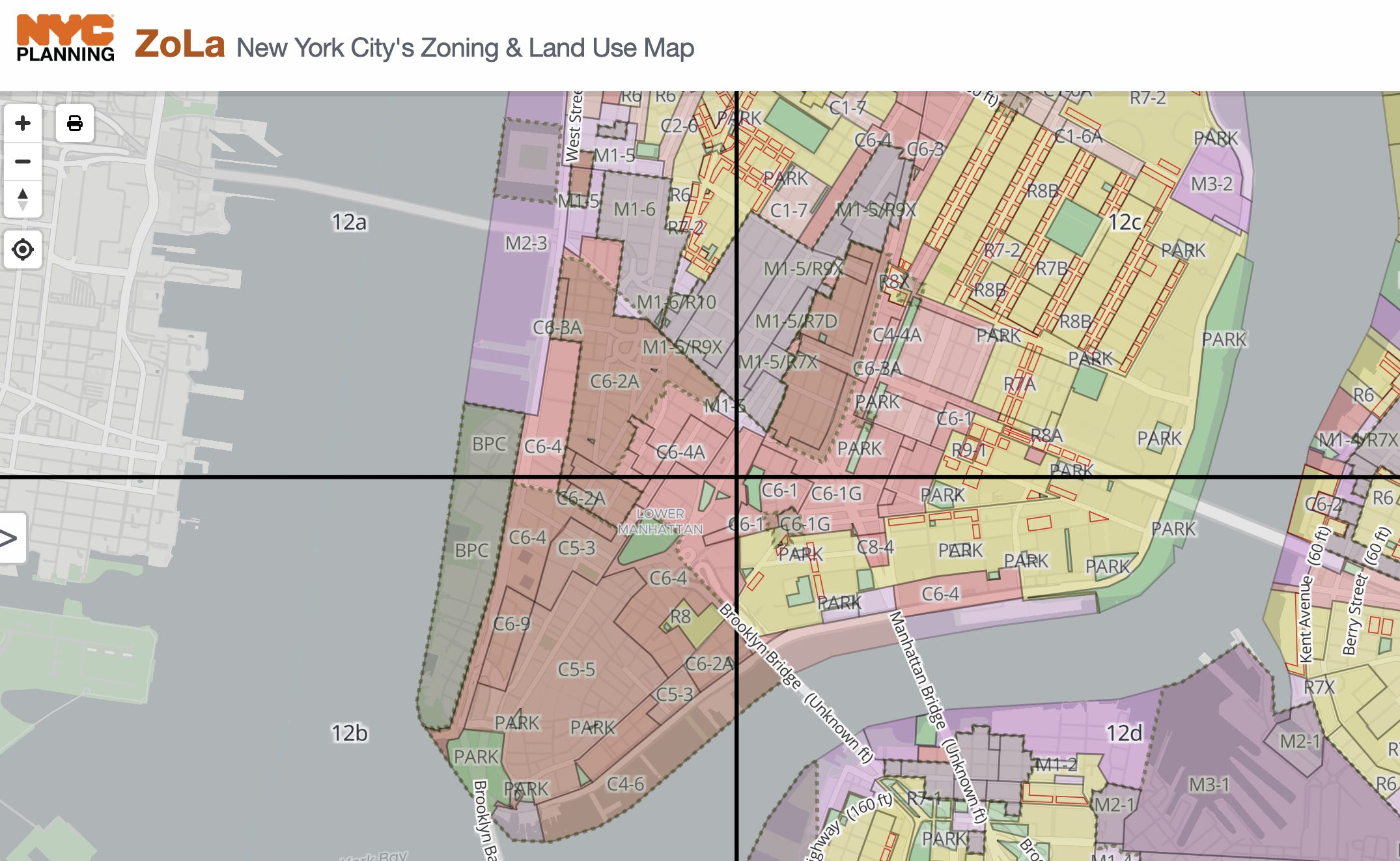
Suppose the Supreme Court overturned Euclid v. Ambler on a Friday. The celebrations would be loud, and deserved. Then Monday would arrive, and every zoning map in America would still hang on the wall of every planning department in the country. The statutes, ordinances, institutions, and economic expectations built around them would not disappear with a single opinion. Every new project filed that day would still have to abide by Friday’s rules, unchanged.
A century is a long time for an idea to set. In 1926 SCOTUS upheld a village ordinance in Ohio. The decision meant that a local government may plan and divide its territory in advance, assign each parcel a purpose, and require the owner to ask for permission for even the slightest diversion from the written rules.
Before 1926, state legislatures had already begun passing rules modeled on the Standard State Zoning Enabling Act (SZEA) drafted by Herbert Hoover’s Commerce Department. The decision gave states that had already begun enacting it, and the many that followed, the Supreme Court’s blessing.
Codes did not compound into volumes because of Euclid alone. The case happened because change was already underway. But Euclid gave all of it the Supreme Court’s cover. Beyond SZEA-inspired state legislation, comprehensive plans and other instruments that came later, such as specific subdivision rules, discretionary tools like design review, environmental review, and public hearings created a regulatory mess we still cannot find our way out of.
Then the price system absorbed all of it. A hundred years of permissions now live inside land values, mortgage underwriting, appraisals, municipal budgets, and the net worth of every household whose home is worth what it is worth because something else can’t be built next door. The distortion has shareholders who vote, show up to hearings, and defend what they hold with the same conviction the founders brought to defending theirs.
As much as we would celebrate its demise, Euclid is but the keystone. Pull it and the arch collapses, but the ruins may prove harder to clean up than a contaminated brownfield in the New Jersey meadowlands.
As with other landmark SCOTUS decisions that changed the framework of America, what Euclid did was change the use of one’s property from a right into a permission. Overturning it would matter, but it would just be a first step. Euclid is the moral keystone, and the real work is legislative.
R-1. Rights District (By-Right Uses Only)
I grew up in Latin America, where rights are understood as emanating from government, and can be taken without much protection. Owning something is easier there, using it as one’s own as well, but also losing it for arbitrary reasons, without recourse. Upon realizing how precarious property rights are in places other than America, I got together with a group of friends to study how the constitutional architecture of America came to be. We read the Federalist Papers, the English Bill of Rights, George Mason’s Virginia Declaration of Rights, which listed among the inherent rights of man “the means of acquiring and possessing property,” and then the Declaration itself.
Most people remember the preamble. Among the less remembered grievances, Jefferson accuses the Crown of “raising the conditions of new Appropriations of Lands.” The grievance capped a decade of Crown restrictions on land that began in 1763, when the British forbade colonists to settle or buy land beyond the Appalachians. Americans rebelled against a sovereign who made the acquisition of land a matter of permission.
In April 1787, a few weeks before the Constitutional Convention, Madison wrote a memo to himself called Vices of the Political System of the United States. He catalogued the laws of the states: their multiplicity, their mutability, their injustice. Local majorities had passed laws that interfered with contracts and private rights, and Madison concluded that they threatened the republic itself. The Constitution was written, in part, because local majorities had learned to vote themselves their neighbors’ property.
What I took from those evenings fits in a few lines. Rights come first. Government comes after, to secure them. The Ninth Amendment says so plainly: the enumeration of certain rights “shall not be construed to deny or disparage others retained by the people.” The Fifth says private property shall not “be taken for public use, without just compensation.” And Madison, in his 1792 essay on property, wrote that a man has property in his opinions, his faculties, and the free use of them, and that “as a man is said to have a right to his property, he may be equally said to have a property in his rights.”
Zoning codes have a phrase for uses you may undertake without asking anyone: by right. Thankfully for us, the concept was not new to the founders, and they applied it to everything.
N-1. Nuisance District (Pre-1926, Harm-Based)
No reasonable person would argue that early Americans lived without rules. Towns that had burned passed fire codes. Gunpowder was stored where the law said. Colonial towns pushed slaughterhouses, tanneries and other noxious trades to places where their effects would be least offensive. The rules were “negative”: only what was forbidden would be regulated. Everything else, you could do.
Common law, that most wonderful inheritance from the British, carried an old maxim across the Atlantic: sic utere tuo ut alienum non laedas. Use your property so as to injure no one else’s. The order of events mattered. The owner acted when harmed, and a broader yet less interventionist law assigned liability.
That order did not disappear overnight in 1926. In the decades before Euclid, the Supreme Court widened, case by case, what local governments could restrict. In Mugler v. Kansas (1887), it allowed a state to ban a lawful business, a brewery, without compensating the owner. In Welch v. Swasey (1909), it allowed Boston to set different height limits for different districts, drawn in advance. In Hadacheck v. Sebastian (1915), it allowed Los Angeles to shut down a brickyard that had been operating before the city grew around it.
The Court could still draw a line. In Buchanan v. Warley (1917), it struck down a Louisville ordinance that segregated residential blocks by race, on the grounds that it violated the right to buy, sell, and use property. And in Pennsylvania Coal Co. v. Mahon (1922), it warned that “if regulation goes too far it will be recognized as a taking.” In hindsight, it would have been tremendously helpful if the Justices had written down how far was too far.
By 1926 many pieces were already in place: bans without compensation, districts drawn in advance, and an owner who was there first but could still be moved aside. Euclid assembled them into a system. As Justice Sutherland put it, borrowing from the old law of nuisance, a nuisance may be “a right thing in the wrong place, like a pig in the parlor instead of the barnyard.” Common law asked whether you injured your neighbor. Euclidean zoning let the village preemptively decide where the parlor was.
U-1. Single-Family Supremacy
Fast forward to the Roaring Twenties. Euclid, Ohio, was a farming village east of Cleveland, directly in the path of the city’s industrial expansion along the rail lines. In 1922 it adopted an ordinance that divided its territory into six use districts, labeled U-1 through U-6. The hierarchy was cumulative. U-1 allowed single-family houses and little else. Each district below allowed everything above it, plus something heavier. Industry sat at the bottom.
Ambler Realty owned about sixty-eight acres in the village. Ambler alleged that for industry, the land was worth around $10,000 an acre, while zoned for homes, it was around $2,500. If those numbers were real, the ordinance would have erased three quarters of the value of the parcel.
A federal district judge, David Westenhaver, struck the ordinance down. He saw that it was meant to “classify the population and segregate them according to their income or situation in life.”
The Supreme Court reversed the lower court in 1926, six to three. The opinion was written by George Sutherland, ironically the Court’s great defender of property and contract. The decision changed the relationship between government and property owners in four important ways:
First, the decision extended to every parcel and every use what earlier cases had allowed piecemeal: it allowed councils to speculate about what might happen, and regulated it preemptively.
Second, the burden of proof was shifted. After the change, if a village’s map was even “fairly debatable,” the village won. The owner had to prove the government wrong. As hard as it must have been in 1926, it is close to impossible today.
Third, the Court upheld the system in the abstract while leaving particularly arbitrary applications to be fought later, case by case. The preemptive blanket regulation prevailed, and each owner would have to return to court when a particular line finally injured him.
Fourth, it redefined the building type that housed Americans for generations as a threat. The apartment house was written in the decision as a parasite and a nuisance, thus allowing codes to banish them from “good” neighborhoods.
The path to that sort of opinion is traceable. New York’s 1916 zoning code had been pushed by Fifth Avenue merchants who wanted the garment lofts, and the workers who filled them, kept away from their shops. Organized real estate wanted zoning to protect established values.
Hoover’s Commerce Department heard them and wrote the model law. By the time Euclid reached the Supreme Court, states were already adopting it.
M-1. Manufactured Scarcity
From activist and academic circles, they have spent decades dismissing the “slippery slope” as a myth brought forth by those opposing progress. Euclid has taught us the hard way that not all change is progress. Once the right was taken, Ambler could no longer direct its land toward the use its owners judged best. The loss of investment, and most importantly losses derived from the opportunity cost, were not unique to Ambler Realty, and have been disastrous over the past century.
Innovation, progress, and prosperity come from human action. Human action, in turn, responds to incentives, and incentives are downstream from the economy. When rights become permission, an extra, potentially very costly step acts as a bottleneck for new development. The owner who wants to do something different now needs a variance, a rezoning, a special exception, or an entitlement. Each one is a favor granted by a board, takes time, bears more cost, and ends up added to the buyer’s price tag.
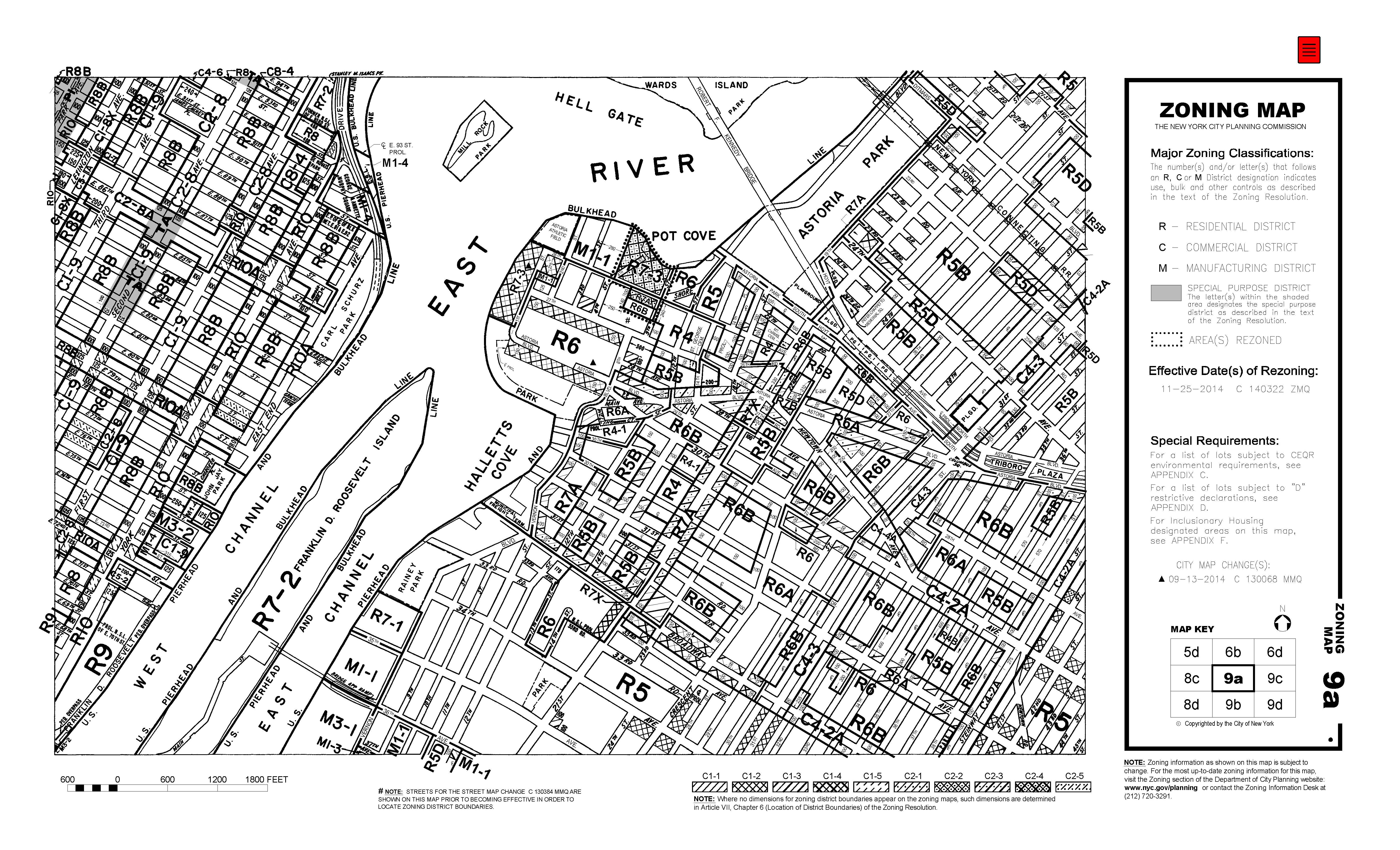
Economists have a name for what that bottleneck adds up to. In the early 2000s, Edward Glaeser, Joseph Gyourko, and Raven Saks compared what Manhattan apartments sold for with what it cost to build them. Homebuilding is about as competitive as industries get, with almost nothing stopping new builders from entering, and in a skyline of high-rises the cost of one more apartment is simply the cost of stacking one more floor. Condominiums were selling for roughly $600 a square foot, more than twice that cost.
The gap was what buyers paid for scarcity: the premium on an apartment that exists because others were not allowed to. The authors attribute the premium largely to local zoning laws and land-use regulations blessed by Euclid. They concluded that it accounted for about half of what a condo owner paid for their unit. They called it the zoning tax. Unlike any other tax, its revenue does not go to the government. It goes to incumbents who already own property.
Their diagnosis could have been written by James Madison himself: piecemeal regulation had taken property rights from landowners and handed them to existing residents, public commissions, and ad hoc coalitions of well-funded opponents.
Knowledge that is distributed and moves people to act entrepreneurially dries out when market signals are replaced by legislation. The merchant who knows this corner wants a bakery, the builder who knows this lot wants four apartments, the widow who knows her upstairs rooms could house her grandson: each of them holds knowledge that is local, particular, and fleeting. And they understand and tolerate risk. That is what gets things built. The zoning map freezes an uneducated guess, made by people with the least information and the least at stake.
When land is priced by arbitrary allowances on a map rather than by what the parcel could do, prices still move, but they measure permission, not potential. A lot’s value tracks the odds of a board vote more than the odds that a bakery or a fourplex would succeed there. The door opens wide to a different kind of speculation: betting on councils instead of customers.
In 2021 Gyourko and Jacob Krimmel measured the tax directly, using data on vacant land bought to build single-family homes to estimate how far regulation bids up the price of land. Around San Francisco, the median zoning tax on a quarter-acre came to about $409,000, more than four times the region’s median household income. In the San Francisco, Los Angeles, and Seattle metros there is no escaping it: land everywhere has been bid up by at least a typical household’s annual income.
A board vote can double a lot’s value in an evening or cut it in half. In the 1930s, the Federal Housing Administration’s underwriting standards favored neighborhoods protected by zoning. Federal mortgage insurance began underwriting risk partly according to the map. The village of Euclid contributed to the blueprint for the national financial infrastructure.
Add all this and let it simmer over 100 years and the distortion becomes the norm. I work on Main Streets. Walk any of them and look up. The second and third floors are dark in town after town, because the apartment above the shop, the most ordinary building in American history, became illegal by law, or buried under so many requirements it may as well be in practice.
CUP. Conditional Use (Public Hearing Required)
In Federalist No. 10, James Madison defined a faction as a group of citizens “united and actuated by some common impulse of passion, or of interest, adverse to the rights of other citizens.” He considered it the deadliest disease of democracy and spent the rest of the essay explaining how a well-built republic contains it.
I had read that passage many times, along with the short life and violent death part that comes after, before I sat through my first public hearing on a building permit. The owner wanted to build something the code allowed only on condition. The neighbors had no claim on the parcel and many didn’t even live in the same block. They had no knowledge of its best use, beyond their own preference that nothing change. Yet they held a veto, lent to them by a delegated police power that Euclid had blessed a century earlier.
Nobody in the room, not even the petitioner, cared to discuss the infringement or asked where the owner’s right came from. It never occurred to them that the question applied. To them, they represented everyone in the community and were doing right by it by denying someone their rights.
Form-based codes are a real alternative to Euclidean zoning that many New Urbanists favor. They have proven successful in streamlining the creation of livable urban spaces, insofar as they allow a multiplicity of by-right uses, establish loose rules meant to generate human-scaled, quirky spaces, and minimize the tyranny of review for most cases. Their adoption remains far from universal, perhaps because doing so asks councils to surrender some of the discretion conventional zoning gives them.
If the alternative to faction is a well-designed republic, with checks and balances, and rule of law, then maybe the alternative to the unfortunate outcome of Euclid abused in a participatory environment is the use of new technologies that make checks and balances one hundred percent nondiscretionary, and rules nonnegotiable.
Automated plan review or algorithmic permitting would make approvals faster and less discretionary, but wouldn’t solve the aggregate, which is what Euclid confirmed: comprehensive, preemptive regulation of land use could be a constitutional exercise of the police power. A century of compound legislation followed.
FLU. Future Land Use (Unassigned)
A post-Euclid future is desirable. Our best cities and towns were built under a handful of narrow rules, most of them aimed at fire and nuisance. Charleston’s peninsula, Over-the-Rhine, and Fells Point were long established by the time their cities adopted comprehensive Euclidean zoning codes.
Many of the country’s first codes are turning or have already turned 100 in recent years. As we discussed above, most have incorporated ancillary legislation at the local, state, and even federal level, that makes the overturning of Euclid a small step towards a future land use of organic, human-scaled urbanism.
We need to weed out discretionary review for projects that already meet the code, hearing processes that turn permits into referendums decided by those with the least skin in the game, large minimum lot sizes, minimum parking mandates, as some states like North Carolina have moved to eliminate, and the effective ban of the building types Americans lived in for three centuries, which incidentally is among the most desirable real estate in Hoboken, Wicker Park, or Boston’s South End. The default must flip back from permission to right, in every code, at every level.
As a Localist, I recognize withdrawing zoning power from local governments might seem like a violation of the principle of subsidiarity. There is a stark difference, however, in legislating from above to prevent a specific vice, and doing it to assume control over matters best solved at the smallest possible level.
States delegated zoning power to municipalities through enabling statutes, many of them modeled on or heavily influenced by the SZEA. Withdrawing the delegation of authority to establish preemptive control is not the same as seizing a local power.
A future land use map left blank by state law leaves it to those with skin in the game to fill, and local governments can still use all democratic tools at their disposal, pass ordinances, hold votes, ask residents, punish harm and keep adding to the tradition of common law. Anything, except writing blanket rules that infringe on rights that have existed well before the town got its charter.
LNC. Legal Nonconforming Use (Rights, Grandfathered)
Zoning has a category for things that existed before the code was written. A corner store built in 1910 in what became a residential district or a duplex on a street later zoned for single houses. The law calls them legal nonconforming uses. They were there first, so most codes let them stay, albeit begrudgingly.
Property rights are the original nonconforming use and as such, they belong in this category. They were here first. Before the zoning code, before the planning commission, before the village of Euclid, before the Constitution that was written to secure them.
One thing that no council can legislate on is what they don’t know. New uses, new building types, new construction technologies, and new commercial typologies that have not yet appeared. A council member voting in New York in 1916 to enact a new Zoning Resolution could never have imagined entire shopping districts would be replaced by a smartphone or that towers well above 1,500 feet tall would cast long shadows over Central Park.
The impossibility of having dispersed, prescient knowledge at the time of writing or amending zoning codes makes them machines to infringe on the future rights of cities, and it makes a spectacular case for going all in on overturning Euclid.
But here is the plot twist: the police power Euclid blessed goes both ways. A willing local government could use its existing powers for a different forecast, to create a different future, and abolish as much as possible of their current preemptive zoning laws that have crippled its own development and social cohesion.
The group I studied with kept circling one question: where do rights come from? We never neatly agreed on one answer. We agreed on one thing: they don’t come from a board, and they don’t arrive by permit. It’s about time we start exercising them to build the American cities of the future.
Jaime Izurieta is the editor in chief of Southern Urbanism. Architect, designer, and urban development consultant, founder of Storefront Mastery, author of Main Street Mavericks and The 10 No-BS Rules for Successful Storefront Design. He has founded a city, a museum, and an architectural practice, planted a few trees, rehabbed a 100-year-old farmhouse, co-owned an independent bookseller, and taught architectural design studios at university. Jaime now serves downtowns and commercial districts all over the country from Montclair, New Jersey, and writes on Substack at The Vertical Sidewalk.

Here's the rub: getting rid of the zoning looks good on paper, but I live in a disinvested neighborhood and I can tell you all it will do is enable more exploitation. It's probably too late. For whatever reason, people who write zoning rarely write about money.
Great article. I think the focus on overturning Euclid is moreso symbolic, I think the real challenge is building up legal protections for the lowest level of authority - the property owner - from having their freedom to use land taken away by larger powers.
I am opposed to form based codes for similar reasons that I oppose euclidian zoning.
Form based codes are the personal preferences for aesthetics and form encoded into law by whoever has managed to capture local politics. I do not think that is a valid use of police power. I think the property owner should have the legal right to decide what they want their building form to be - so we can experiment and evolve in regards to building form.