

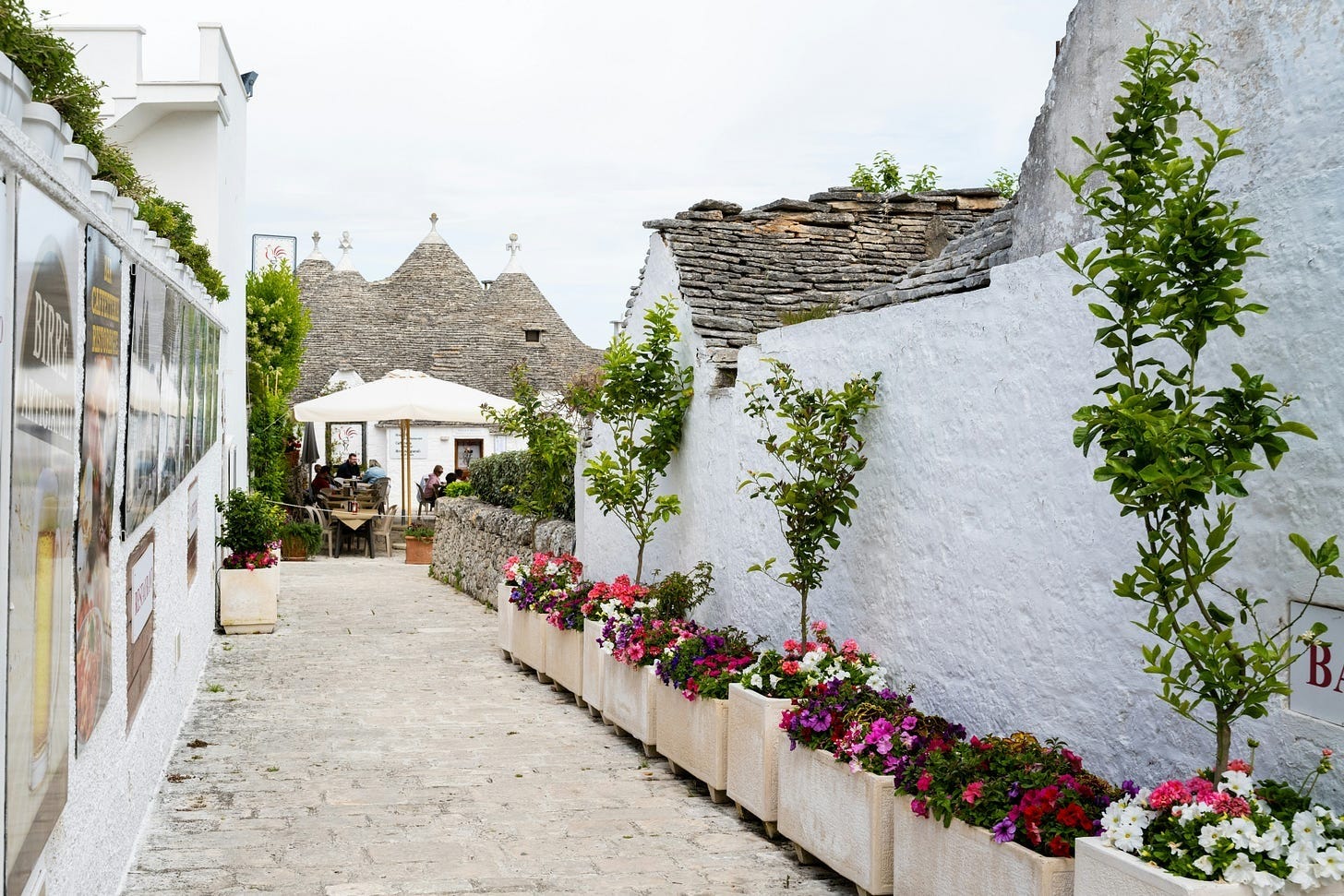
Adobe as a building material is alive. It moves, it breathes, it’s messy when you’re laying it, it cracks where it needs to crack, it begs for a natural, hand-finished plasterwork and a whitewash, and it tells you exactly what it wants if you shut up and pay attention. It’s also remarkably inflexible when it comes to bearing loads.
The construction system of adobe- and roof-tile Spanish colonial buildings is a great metaphor for what’s wrong with the historic preservation profession.
When I was renovating a 120-year-old Spanish colonial revival estate adjacent to a Franciscan monastery from the 1700s, I learned that you will ignore the requirements and limitations of adobe at your own peril. That experience transformed the way I think about old buildings, how they interact with us in our cities and towns, and about urban interventions in the context of historic designations.
Adobe is strong. When properly built, tied, and reinforced, it behaves incredibly well under seismic conditions and keeps the building warm in cold weather and fresh when it’s sweltering out.
Builders, masons, and carpenters have known this intuitively and empirically for centuries. Yet politicians vote in modern building codes that undermine historic adobe preservation by mandating rigid seismic framing, synthetic energy insulation, or impermeable cement finishes. They override centuries of empirical knowledge and turn adobe buildings into anomalies that no longer do the job they are best suited for: serving as benchmarks for the most lovable architecture.
Adobe is a beautiful building material. It provides a tectonic quality that shows in weight, depth, and gravitas. It is compatible with certain materials and catastrophically incompatible with others. Add brick with lime mortar to an old adobe wall, and the wall gets stronger. Add wood, with proper hardware and support points, and it bears new, heavier loads gracefully. These pairings have been discovered by builders over centuries of trial, failure, and refinement. The materials share a logic. They expand and contract together, they breathe together, they age together.
Now introduce plastics, concrete, and steel. Materials that don’t dance, don’t breathe, don’t negotiate, but are invited to the party because politicians say so. They look flawless when brand new but lose every bit of their aura with the first scratch or dent. Adobe doesn’t just perform poorly when paired with them. It fails beyond repair because they are incompatible materials that do not age cohesively, plus aging for some newer materials like rebar means it can endanger adobe’s integrity.
The rigid material creates stress points that the adobe cannot absorb, cracks propagate where they never would have, and the wall that survived three centuries of earthquakes collapses because someone “improved” it.
The preservation profession works the same way. When the system grows organically from the culture of building (craftsmen passing knowledge down, owners learning their buildings, the market rewarding stewardship), it holds. It’s thick, it’s rough, it’s imperfect, and it lasts. But bolt on an incompatible bureaucratic framework, rigid and unyielding, designed by people who don’t understand what they’re governing, and the whole structure cracks beyond repair.
Heuristics at the Wheel
There’s a beautiful irony at the extremes of the economic spectrum when it comes to old buildings.
Paul Goldberger said about Nantucket that poverty is “a great friend to preservation.” The poor owner of a crumbling one-story on a forgotten block preserves by default. He can’t pay for a demolition. He can’t afford to renovate with whatever material the Home Depot gods recommend this season.
The original plaster stays because there’s no budget to replace it. The wood windows remain because vinyl replacements cost too much. While decaying, the building survives not by policy, but by the gentle neglect that, paradoxically, often does less damage than intervention.
The savvy developer has capital, taste, and a long time horizon. He looks at a beautiful old building and immediately sees that its real value is its dignity and presence.
The sophisticated investor knows that the weathered beauty, the craft, and the honest materials are what make the building uniquely valuable, and a smart investment. He knows better than to touch it.
What these two groups share is skin in the game: they will feel the consequences of bad decisions made regarding their property, so they apply the “if it’s working, don’t touch it” heuristic to preserve the building.
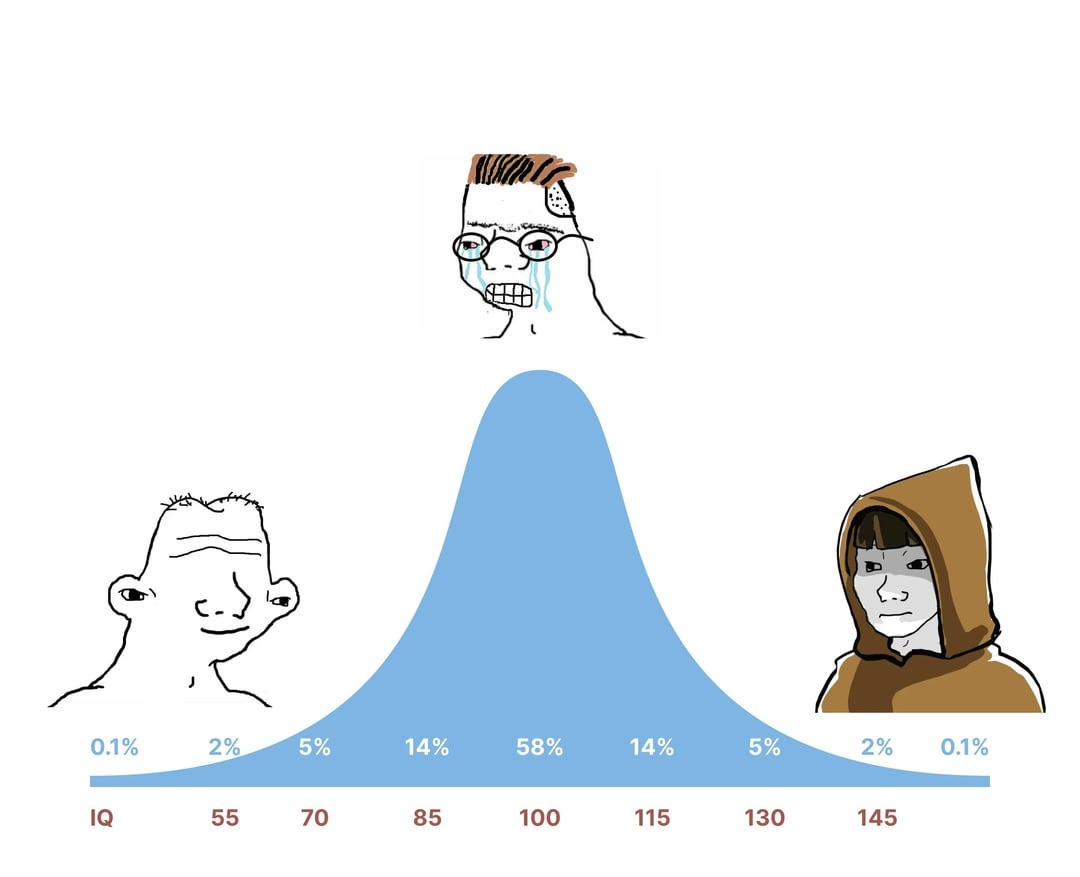
The poor owner lives with every crack and every leak. The savvy developer has capital on the line. Both bear the consequences of what happens to the building. Both, from opposite ends, arrive at the same outcome: the beautiful old building is best left untouched. There’s a third party in this story. Best explained by popular culture:
The Rent-Seekers in the Middle
Between these two preservation-minded groups sits an enormous bureaucratic apparatus that has somehow convinced everyone it’s the guardian of our architectural heritage. It is a coalition of diverse actors who inhabit the space, and they all have one thing in common: they bear no risk.
Rent-seekers are those who profit from a process without creating any value. The tent is big and has recurrent characters: preservation officers who memorize the Secretary of the Interior’s Standards for Rehabilitation, but have never had to pay with their own money for the added costs they represent; or the review board member in a New Jersey township who delayed a business opening for months because she argued the branding was incompatible with the building.
Some of the worst villains are the intellectuals, academics, and activists who come up with elaborate theories and moral justifications to infringe upon property rights and extract resources from entrepreneurs and investors. These are the ones who show up at the preservation board meetings feeling entitled to tell the owner how to use his property.
The system rewards procedural experience over mastery of buildings. It generates fees, delays, status, and influence for the people who add friction, and passes the costs to the people who bear the risk. The budget, the interest, the carrying costs are irrelevant to the regulators, because they never sign checks. They are also irrelevant to the large corporate developers to whom those costs are negligible.
This is the definition of rent-seeking. Malice may not even be part of the equation, but incentives produce bad outcomes even when good people are involved. The preservation system has evolved as a layer of gatekeeping between the building and the people who actually care about it, and that layer extracts at every step without producing anything.
While people with zero skin in the game argue that only rich people will get to live inside the historic district, three blocks away, an entire row of not-so-grand yet irreplaceable old buildings gets scrapped for a cheap apartment building that will be outdated and shoddy in 25 years. The gatekeepers obsess over the sandbox while the city loses one chance after another of preserving what matters.
The Sandbox
I went to school for historic preservation, in one of the best cities in America to learn how preservation makes better cities, transforms lives, makes economic and financial sense, and teaches values and civic pride. I’ve also had the privilege of working on both sides of the permitting desk.
I feel strongly positioned to tell you that historic preservation, as institutionally practiced, is a containment strategy.
The same planning establishment that runs preservation programs (all the academic departments, the commissions, the local and state government agencies, and nongovernmental organizations) is overwhelmingly staffed and trained by planners and architects who are taught to see traditional ornament and historical styles as outdated or even harmful. People whose design instinct is to break with the past, not continue it.
These are the people who write the rules for what you can do to old buildings.
And the system they’ve built is elegant, if you understand the game: designate a few blocks as a “historic district.” Give the traditionalists their walking tours, their bronze plaques, their design guidelines. Let them feel like they won something.
Even inside the sandbox, the game is rigged against new traditional building. The Secretary of the Interior’s Standard 9 mandates that new work “will be differentiated from the old” but also “compatible” with it. It names the dimensions of compatibility, such as materials, features, size, scale, proportion, and massing, but keeps it loose as to how compatible is compatible enough. Standard 3 flags changes that “create a false sense of historical development” as bad practices. Good luck with your review board.
Meanwhile, the rest of the city operates under zoning rules, building codes, and a complicated approval process. These rules make traditional construction almost impossible. They also make fixing up existing older buildings extremely expensive to do, and expensive to live in.
The historic district is the reservation. The rest of the city is the modernist’s open field. And even there, architectural review boards will mandate design away from historic details because “they’re not of this time.”
And the preservation establishment (the rent-seeking layer) enforces the boundary. They make sure everything within the sandbox stays quaint and controlled, while never questioning why the rules outside the boundaries produce buildings that no one will love or want to preserve.
Preserve the Business Model
The market is how we figure out what things are worth to those we want to sell to. Tracking price changes in a free market is the way to understand trends and justify our value proposition.
Old buildings are highly valued assets in most American cities. They have a tremendous upside when rehabilitated, because they make the best stages to offer unforgettable moments. And that is good business for retail, food and beverage, hospitality, and other businesses. Yet too many of those beautiful buildings still sit empty or decaying because absurd rules make fixing them up almost impossible to afford.
Every downtown district manager I’ve worked with intuitively knows that rents follow authenticity, because foot traffic follows character. Consequently, investment follows uniquely valuable assets. The streets with original buildings, original storefronts, and original details are the ones that gather crowds avid for new experiences. Old buildings generate new ideas, commerce, and civic pride.
Entrepreneurs with skin in the game and backed by robust investors have known this forever. The best developers don’t preserve the old building because a historic review board tells them to. They preserve it because destroying the character would obliterate the highest selling point in their business model.
Poor owners with decaying buildings they love and fix by hand know this too, even if they can’t articulate it in those terms. They know their building has something that the new construction down the street doesn’t, which makes people slow down, look up, and walk in.
Preserve the Culture
Real preservation is not a regulatory framework. It’s a culture of building, a mindset, and a way of understanding why new ideas need old buildings. What we want to preserve is what happens in the city when the energy from the buildings inspires us to solve problems, innovate, and build. Not the carcasses of buildings, but the ideas and values that got those buildings built in the first place.
The fabricator who bends wrought iron or the mason who lays brick the way it was done in 1890 do what they do because someone taught them the value of keeping tradition, not because a specification told them. They are the protectors of history and heritage. So is the business owner who keeps the original terrazzo because they understand it’s the most valuable surface in their storefront. And the district manager who teaches merchants about the heritage of their block, and finds creative ways to do things, instead of just citing code violations.
It’s what I’ve been writing about for years: when everyone is aligned on the soul of a place, the local culture, the shared identity, you don’t need heavy-handed enforcement.
You can train craftsmen. Fund apprenticeships. Build the local capacity to maintain and repair old buildings in their own material language. That’s great, and it’s needed. You can also keep the incentive structures where tax incentives and other instruments reward stewardship. This is one of the greatest drivers of large-scale preservation and rehabilitation projects.
But the most important thing, without which the list above is worthless: stop letting people who don’t seem to believe in traditional building write the rules for how we take care of it. The sandbox was never a victory. It was a concession. The real fight is over what we’re allowed to build, and how, on every other block.
When Jane Jacobs said that new ideas need old buildings, she was referring to how they have paid off their construction costs so they could make good, thrifty places where gritty, bootstrapped entrepreneurs could think of the next world-changing innovation. She might as well have been thinking about character. The patina of time, the smell of old wood, the texture of old brick, and the unevenness of settling over time are some of the things that give old buildings their character.
While we cannot reproduce those in new construction, the proxemics, sunlight, or ceiling heights that shape how we think can be the core design principles of good traditional buildings. But if we want to build more traditional buildings that offer the same character and foster new ideas, innovation, and prosperity, the Secretary of the Interior might like a word.
Adobe walls are two feet thick. They’re rough. They’re imperfect. And they have stood for centuries because the people who built them, and the people who came after, respected what the material demanded. They didn’t try to make it something it wasn’t. They didn’t bolt steel onto it to make it “better.” They added what was compatible and left the rest alone.
That’s all preservation ever needed to be. Good construction, honest materials, understanding of how design affects us, and the humility to let the building teach you. Investors, builders, and owners who bear the weight and reap rewards. Not gatekeepers who profit from the cracks.
The people at the extremes have always understood this. It’s only the middle, the rent-seekers with no skin in the game, who insist on improving what already works and wonder why the whole thing cracks.
This essay first appeared in The Vertical Sidewalk and has been edited and republished with permission.
Jaime Izurieta is the editor in chief of Southern Urbanism. Architect, designer, and urban development consultant, founder of Storefront Mastery, author of Main Street Mavericks and The 10 No-BS Rules for Successful Storefront Design. He has founded a city, a museum, and an architectural practice, planted a few trees, rehabbed a 100-year-old farmhouse, co-owned an independent bookseller, and taught architectural design studios at university. Jaime now serves downtowns and commercial districts all over the country from Montclair, New Jersey, and writes on Substack at The Vertical Sidewalk.