

This essay is one of a five-part series analyzing American Land Use at 250.
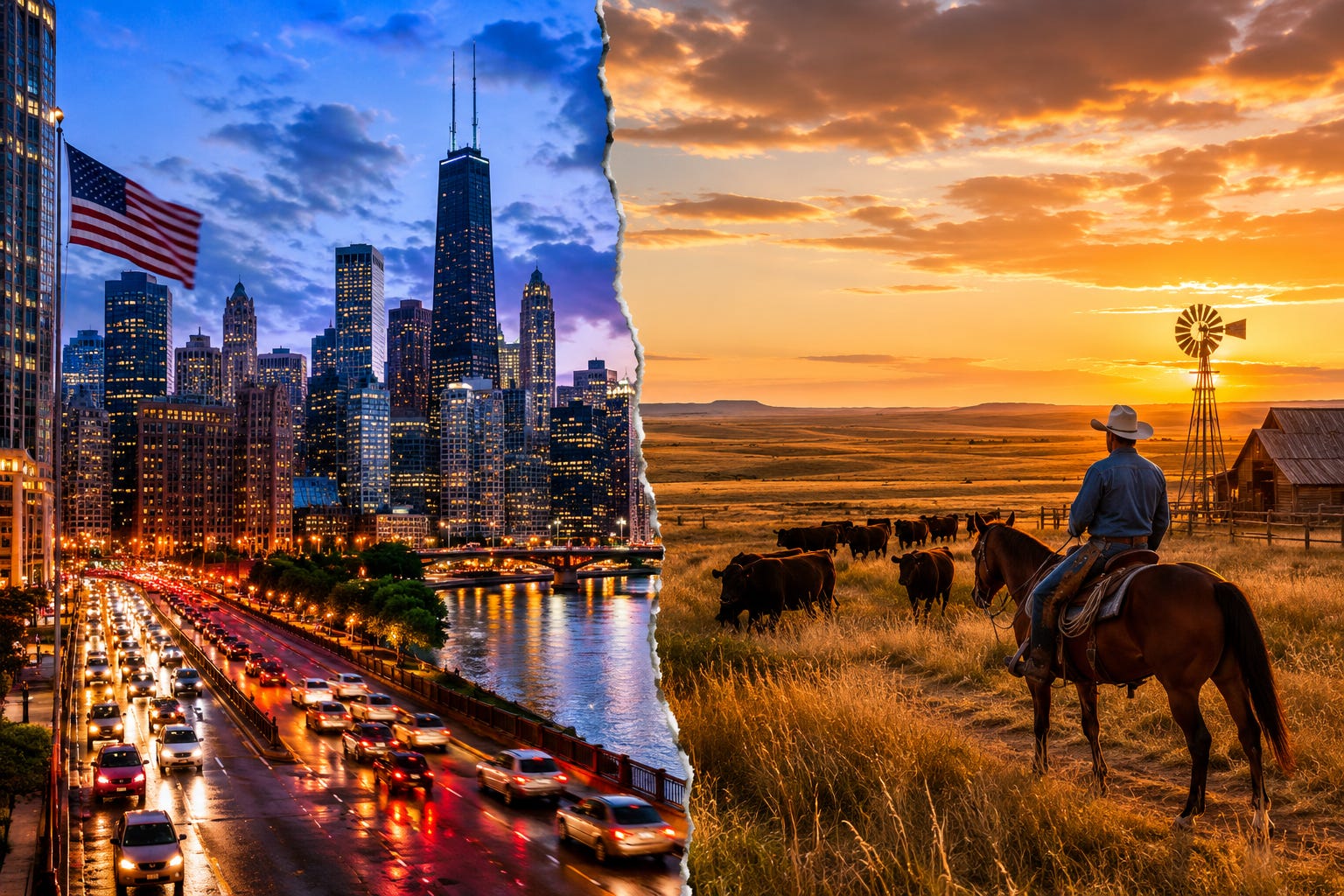
Cultivators of the earth are the most valuable citizens. They are the most vigorous, the most independent, the most virtuous, & they are tied to their country & wedded to its liberty & interests by the most lasting bands. - Thomas Jefferson
“It will not be doubted that with reference either to individual or national welfare, agriculture is of primary importance. In proportion as nations advance in population and other circumstances of maturity this truth becomes more apparent, and renders the cultivation of the soil more and more an object of public patronage”. - George Washington
“Such is the Frailty of the human Heart, that very few Men, who have no Property, have any Judgment of their own. They talk and vote as they are directed by Some Man of Property” - John Adams.
The American experiment has long worked to reconcile fundamental conflicts of vision: Federalist vs Anti-Federalist, Loyalist vs. Patriot, Protestant vs. Catholic, Agrarian vs. Industrial. Tension between this later group, the agrarians and the industrialists, was only the most recent manifestation of the age-old division between the city and the field. This tension is as natural to mankind as the tension between the material and spiritual life, and the work of reconciling them is the work of every generation. Human civilization properly consists of both urban and rural life; a flourishing American civilization will, therefore, consist of flourishing human habitats both urban and rural.
The modern mind does not believe in healthy tension, it tends to totalize even minor differences and insists that opposites must repel and never attract. For a nation whose earliest metaphor was the melting pot, America on her 250th is a nation still uncomfortable with the tension between the two fundamental worldviews of the city and the field. The stereotyping of Midwesterners and southerners as backward, idiotic bigots by the cosmopolitan is but one example. The belief generally held outside our big cities that the American cosmopolitan is the root of this country’s social, cultural, and economic problems is another. Perhaps it is because of this disbelief in the possibility of healthy tension, and the moderating desire to avoid either end of the stereotypical spectrum, that the pioneering American invented a new liminal space: the suburb.
Suburbia: neither having your cake nor eating it.
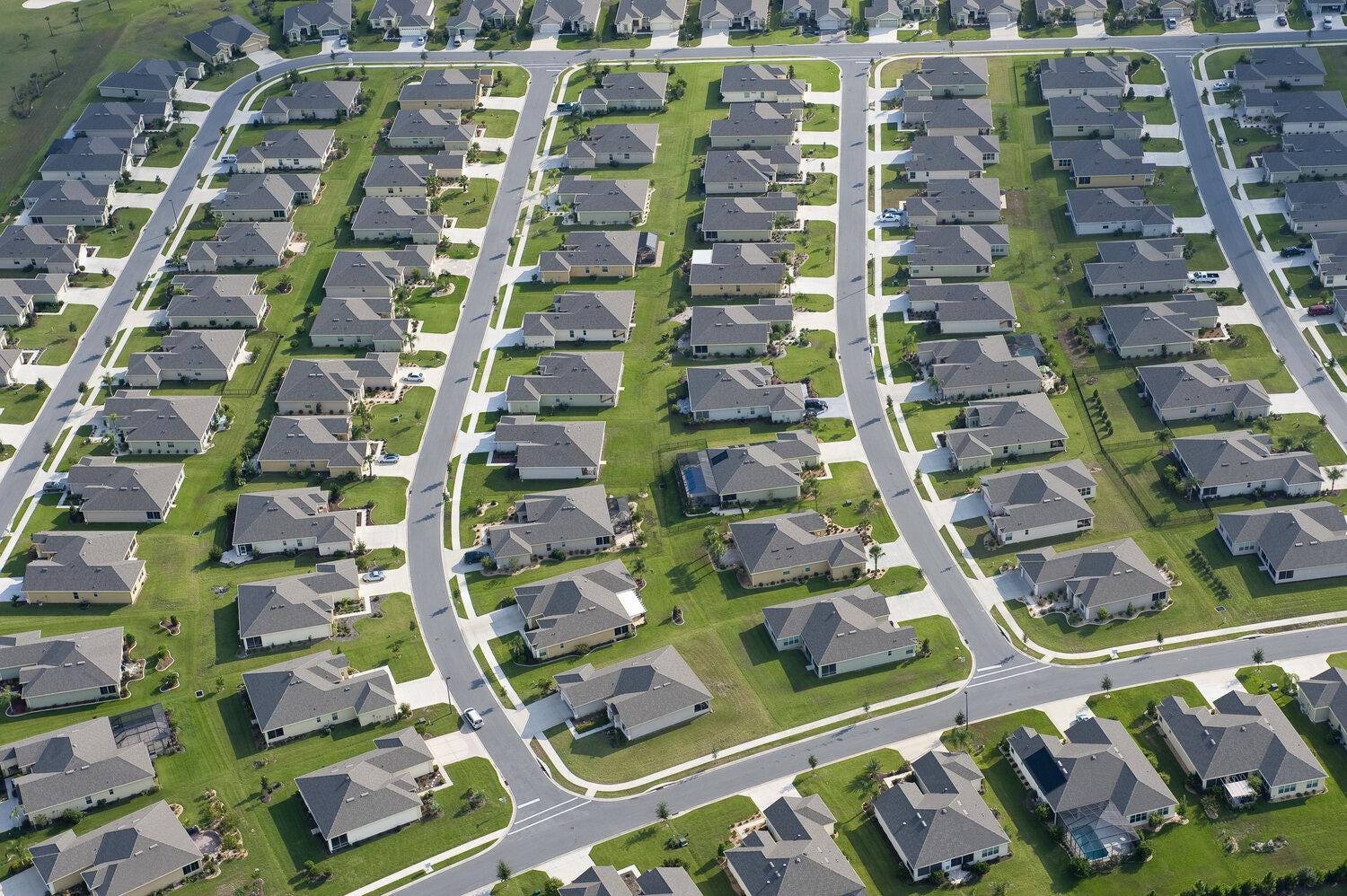
The suburb expresses the view that the city is not conducive to a thriving human life, but also that one ought to be close to the city for amenities and opportunities. When asked why he does not simply move to the country the suburbanite is like to respond “Heaven forbid! What, for God’s sake, would we do in the country?”. And they would not be wrong. It is true that we have hollowed out our city centers, it is equally true that we have hollowed out the American rural landscape.
To fill the cities in the first place, it was necessary to ransack the countryside and displace whole populations to feed the industrial factories whose wealth tended to be the material cause of turn-of-the-century citybuilding.1 To make a long and complicated history shamefully short, the subsequent degeneration of the cities into something less than human pushed the city-dwellers out. But there was no countryside to return to, the family farm having been bought out and strip mined (literally or metaphorically) for all it was worth. And so entered the American suburb, an ill-begotten via media.
The suburb is a modern anomaly: an uneasy truce between the city and the field propped up by the automobile. Whatever its merits, it is necessarily a parasitic entity. It has neither the distinction of being able to provide for itself (like the fields of the countryside) nor does it offer any unique value worth providing for (like the goods of the city, tangible and intangible). Perhaps worst of all, it has no claim to the joy that accompanies the giving and receiving of gifts. For the city and the fields can both rightly claim to be benefactors and beneficiaries of each other, each pleasantly exchanging the abundance of the goods proper to it with the other. But the suburb can only take, it is a mere holding ground, a warehousing of people the real content of whose lives is always had elsewhere.
Cities, towns, and hamlets.
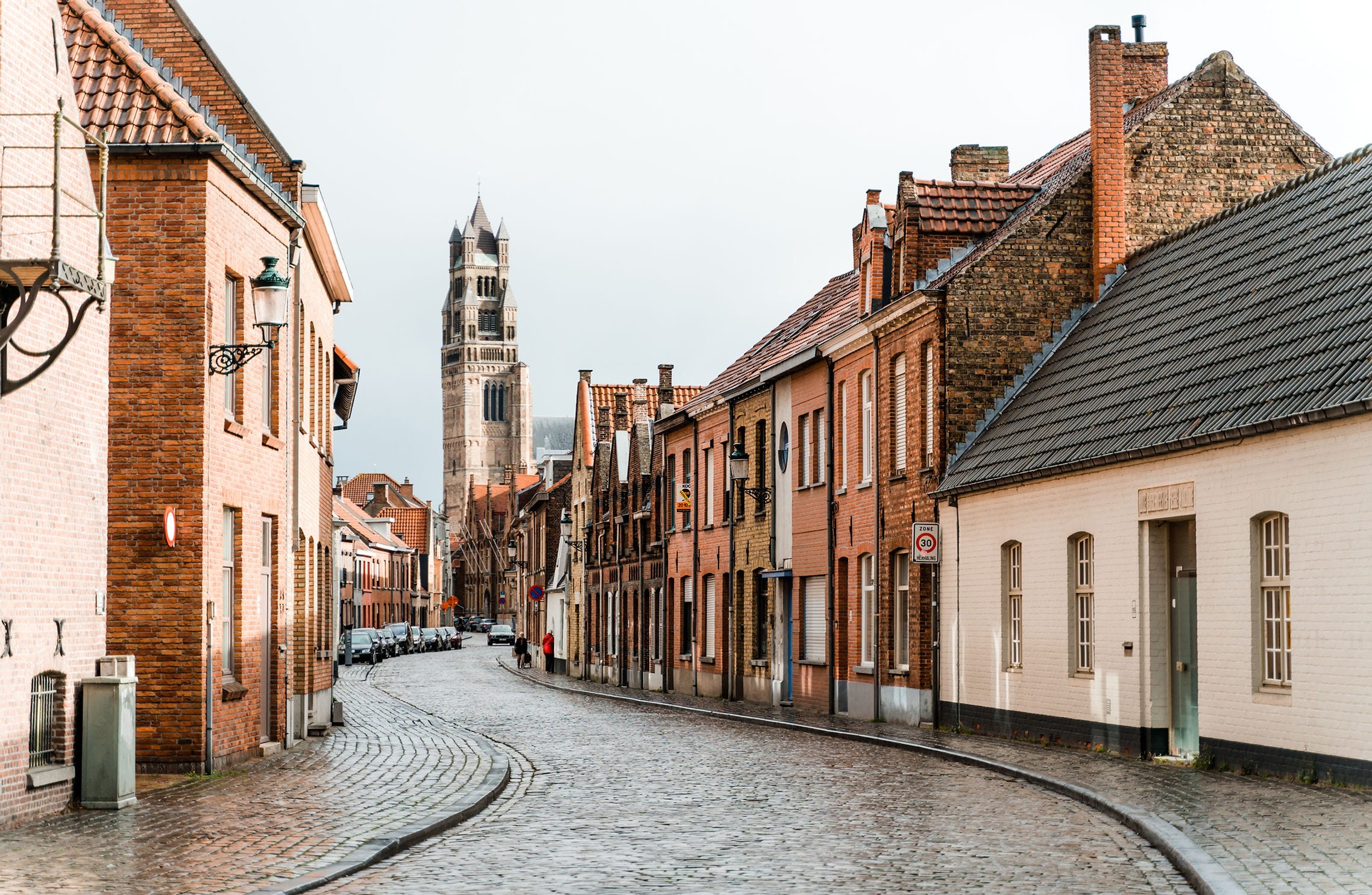
City-building is an impulse natural to man. We are a political animal, by which the western philosophical tradition means that the human person thrives “only within the framework of an organized polis. The polis ‘comes into being for the sake of living, but it remains in existence for the sake of living well’”.2
The city is place of cooperation with the powers of man. A place to be lifted up by the virtues of your fellows or suffer the burden of their vices. It is a place of great activity, both in quantity and quality. A place improved by the addition of others seeking the same final end. Cities enable the greatest of cultural and artistic achievements. They are a necessary condition for the highest common goods of peace, prosperity, and public welfare. They pass down to us the patrimony of our ancestors in the form of their buildings, the curve of their streets, the history of their stones. The city invites you to become a part of a larger human project, but it is always wary of repeating the fatal mistake of Babel.
The city represents the concentrated efforts of mankind. This is the value of urban density: not in arbitrary enclosure, but in the concentration of good things. It is the concentration of cities that allows for social goods like festivals and the arts, but also concrete goods like great buildings and infrastructure. The city is the finest instantiation of the idea of the common good, and it is where such goods must be held and preserved if they are to be had at all.
The city exists in a symbiotic relationship to the countryside: there are no cities without farms, and the concentration of the city exists as a good because it is counterbalanced by the expanse of the fields. This is especially true for America, whose national character bears the mark of that uniquely American experience: the frontier. Of all the colonial efforts undertaken by Europe, few so captured the lasting imagination of the world as the settling of the American west. Will any city supplant, in our mind’s eye, the esteem held for the cowboy?
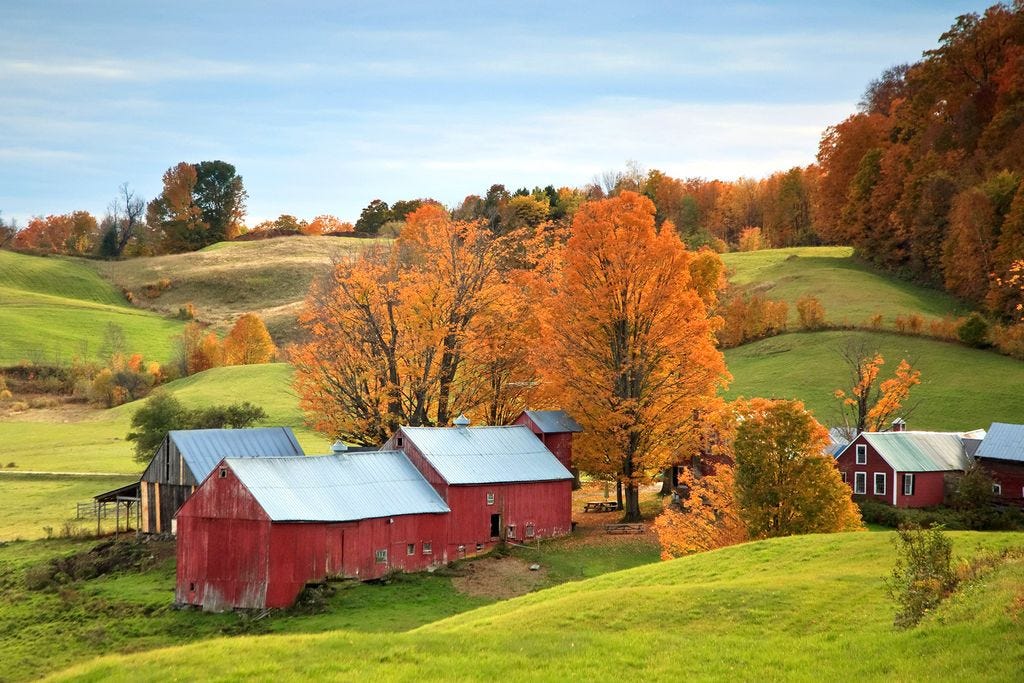
The Cowboy and the Fields
The countryside is a place of cooperation with the powers of nature, a chance to participate in the divine act of creation. It is a place perfectly sized to the most intimate of human ties: where the necessities of life are well-met by individuals, families, and friends. In the countryside, there is no one to blame for your lot. Here one must of necessity be a capable generalist, there is no possibility of outsourcing those parts of life one does not feel like doing. It is a place where the relative merit of one’s labor is never in doubt. It is often the scene of great satisfaction, where the feeling of one-ness with the created order is stitched into the fabric of everyday life. The fields are a place of great generosity of spirit: the self-made man is one who delights in the prospect of using his strength to lift others up.
The founders leaned heavily on the importance of agrarian life. Jefferson is perhaps the most famous of the pro-agrarian founders. He explicitly linked virtue and agrarianism, predicting that the piling up of people in cities would lead to their corruption. Washington considered himself first and foremost a farmer, believing the life of a husbandman to be the most honorable. But the idea that a culture should be built by those rooted in the reality of country living is an old one. The Roman emperor Cincinnatus, who was sought out to lead the empire at the hour of its greatest need, was famously found plowing his fields (to which he returned two weeks later when his task was over).
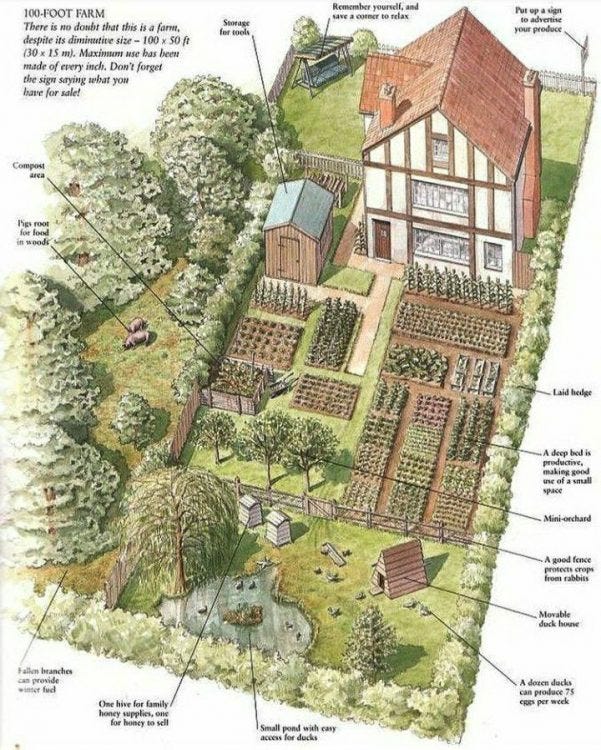
A restoration of the countryside is concerned with much more than “the environment” by which is meant “the ecosystems of the non-human natural world”. It is concerned with the kind of moral environment which teaches the virtues we associate with great men. The American democratic ideal is embodied in characters as disparate as Cincinnatus and Daniel Boone, George Washington (wig and all) and Buffalo Bill. The American dream is the dream of being rewarded on the basis of merit rather than birth, that the only limits placed on one’s success where the laws of nature and your willingness to work. The American experiment intentionally distanced itself from the Aristocracies of Europe, and it valorized men of independence. It is primarily in the countryside that one finds the conditions which produce such men. If it is in the character of the city to build great peoples, it is in the character of the countryside to build up great people, and it is from the fruit of the countryside that the city is built.
It is worth responding to the objection which the word “agrarian” so often unjustly invokes. It is the same objection typical of Wendell Berry’s less critical readers who consider the sophomoric observation that “not all goods must be had in an agrarian context” and the implied conclusion “we can therefore ignore him” to be a pithy takeaway. These are the knee-jerk anti-agrarians and they share more than a name with their cousin, the knee-jerk liberal. At the heart of both reflexes is a moral impulse. The anti-agrarian may, for one reason or another, feel himself threatened by the agrarian argument. The virtues of city living may be safely touted, but suggest the countryside may offer certain distinct advantages and dissidents will overturn the table in their haste to object “whatever you may say, I certainly am immune from the proscription to do anything about it”; as if the possibility of a tomato plant in a window box represented a threat to personal sovereignty.
The restoration of the countryside, particularly as an alternative to the suburb, does not imply that all must eek out a living as subsistence farmers. It is a recognition of a feature of the created world: that the human being is wonderfully fit to work and enjoy the land in a multitude of ways (farming or otherwise). Doing so in peace and freedom has tended to produce men and women of incredible quality, and the world needs them.
An organist, a vocalist, and a pump boy walk into a bar
A famous baroque organist once quarreled with his partner, a vocalist. “I am the greater of us two, if it were not for my beautiful playing, no one would come to hear you sing”. “Preposterous!” replied the vocalist “it is only on account of my beautiful singing that we draw such great crowds. Without me, no one would come to hear you play”. “But without me”, came the small voice of the pump-boy from the bellows chamber, “neither of you would be able to perform at all”.
The tension between the city and the fields is like this. They work best in concert with one another, each has perfections proper to it, but neither exists perfectly without the other.
The city is one of the preeminently proper habitats for the human person. It is not for nothing that St. Augustine, echoing a longstanding Christian tradition, speaks of the “City of God” rather than the “Fields of God”. But woe to those who build them badly. Corruptio Optima Pessima, “the best, corrupted, becomes the worst”. Josef Pieper popularized the idea both that leisure is the height of human activity, and that the festival is the height of cultural activity. Some of these goods are only possible in the city, others merely achieve their pinnacle there. In either case, the human experience is cut off at the head when the city is corrupted.
The countryside is, arguably, the seat of civilization. It is where the tenuous connection between the embodied spirit of human person and the rest of creation is forged. It is the unspoken antecedent to all that there is: there are no cities without farms. It is the place where even the inveterate city-dweller retreats when his soul is weary. This is the countryside, it represents that other half of the human experience concerned less with corporate goods than with personal ones. These are the two lungs of civilization, the city and the fields. And America, young amongst history’s nations at 250, has already a deeply ingrained fondness and national memory for both of them. Her success, her flourishing, and her healing, will be played out in the space created by the harmony of city and field.

Southern Urbanism is supported by James Hardie, and readers like you.

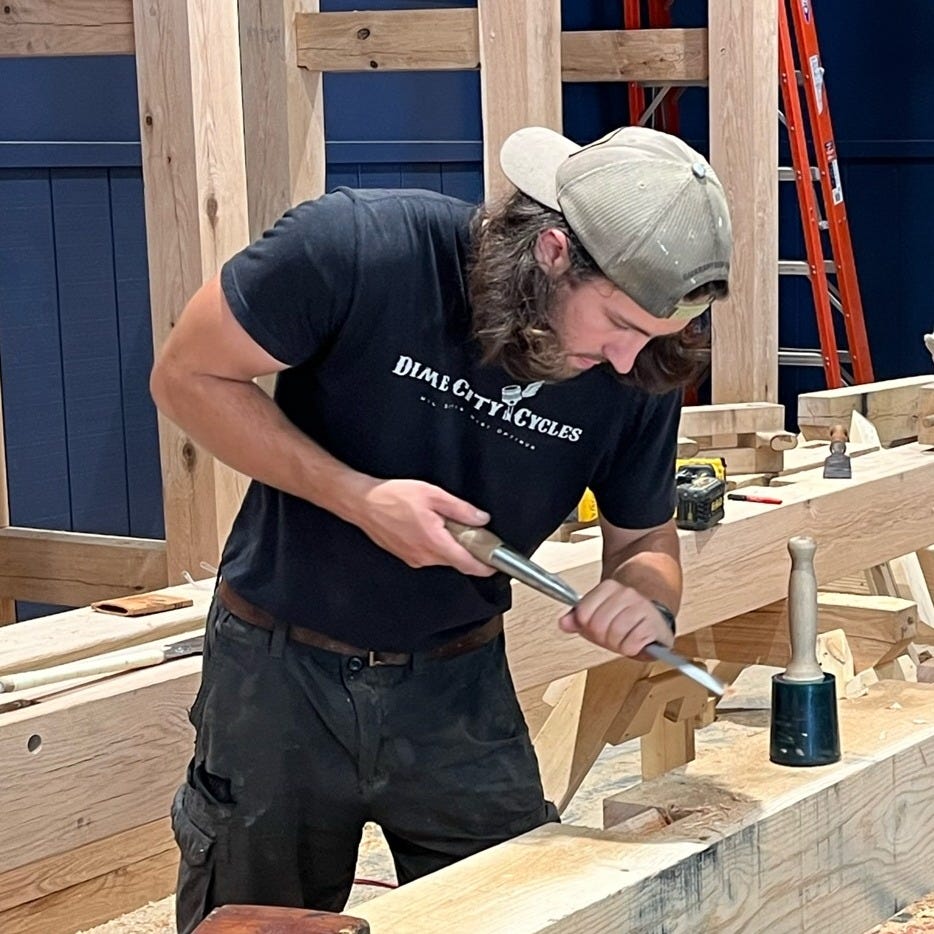
Nick Larkins is a Philosophy-graduate-turned-craftsman, and has worked as a pipe organ builder, welder, historic home GC, timber framer, motorcycle mechanic, and furniture maker. He presently works in Cartersville, GA, as the head of Craeftworks, a millwork and fabrication shop integrating traditional building practices with incremental development. He writes about the interconnection of the building arts, the liberal arts, and human flourishing. He publishes at With Tools in Hand.
Estimates average that at the beginning of the 20th century, 90% of Americans lived in “rural” settings, but by the beginning of the 21st, 90% lived in “urban” zones.
https://plato.stanford.edu/entries/aristotle/
I feel seen! Having grown up in a rural community, some people wonder why I care so much about urbanism. I've watched suburbia tear apart rural NC throughout my life. Great cities allow the countryside to thrive. The unfortunate truth is that developers are economically incentivized to pave over the countryside with suburbia. What levers can we pull to fix this?
Cityscape and countryside as the two halves of the human habitat — that framing stays with you. Thank you for this one.